

Table of Contents
- Why Clear Aligners Require a Strategic Timeline Approach
- Understanding Your Personalized Treatment Plan Duration
- The Critical First Month: Setting Your Alignment Success
- Mid-Treatment Checkpoints and Adjusting Your Progress
- How Our Advanced 3D Imaging Accelerates Your Results
- Maintaining Aligner Compliance for On-Schedule Results
- Common Timeline Delays and How to Avoid Them
- What to Expect During Your Final Refinement Phase
- Post-Treatment Retention: Protecting Your New Smile
- Real Timeline Results from Our Miami Patients
- Frequently Asked Questions (FAQ)
Why Clear Aligners Require a Strategic Timeline Approach
Clear aligners work by applying consistent, gentle pressure to shift teeth into their ideal positions over weeks and months. This biological process cannot be rushed, yet it can be disrupted if you don’t follow your treatment plan closely. Your teeth need adequate time between aligner changes to respond, and your jaw needs to adapt gradually to each new position.
When patients commit to a clear timeline strategy, they experience fewer complications, faster overall progress, and results that actually arrive when predicted. A strategic approach means wearing your aligners the prescribed 20-22 hours per day, attending all scheduled checkups, and communicating any concerns immediately. Think of it like a road map: you wouldn’t ignore traffic signals and expect to reach your destination safely or on time. The same principle applies to your smile transformation.
The investment in planning your treatment timeline upfront also reduces frustration. We help you understand realistic milestones so you can anticipate progress rather than feel uncertain about where you stand. Clear aligner orthodontics has transformed how thousands of Miami residents achieve the smiles they’ve always wanted. Unlike traditional braces, aligners offer a discreet, removable path to straighter teeth. But success depends on understanding and following your treatment timeline carefully. We’ve guided countless patients through this journey at Smile Expert Design Center, and we know that realistic expectations and strategic planning make all the difference between an on-schedule result and unnecessary delays.
Actionable takeaway: Before starting treatment, ask us for a detailed month-by-month timeline projection so you have concrete milestones to track rather than vague expectations.
Understanding Your Personalized Treatment Plan Duration
Every smile is unique, and so is every treatment timeline. When we evaluate your teeth using our advanced X-MIND PRIME 3D digital imaging system, we map out exactly how far each tooth needs to move and in which direction. This precision diagnostic foundation allows us to create a custom aligner schedule tailored specifically to your case.
Treatment duration typically ranges from 6 to 18 months, depending on your starting bite, tooth positions, and treatment complexity. Mild crowding or spacing issues may resolve in 6 to 9 months, while more involved cases requiring significant jaw alignment adjustments may extend toward 18 months or longer. We always provide a clear treatment estimate during your initial consultation, complete with a month-by-month outline of expected changes.
Your personalized plan includes:
- Number of aligner trays you’ll receive
- Frequency of aligner changes (usually every 1-2 weeks)
- Recommended checkpoint visits to monitor progress
- Anticipated refinement phases if fine-tuning is needed
Understanding these specifics helps you mentally prepare and builds confidence in the process. You’ll know exactly what to expect and when to expect it.
Actionable takeaway: Write down your projected completion date and key milestone dates during your initial consultation, then review them before each checkpoint visit to stay motivated.
The Critical First Month: Setting Your Alignment Success
The first month establishes the foundation for your entire treatment journey. During this period, your teeth begin responding to the gentle forces from your initial aligner trays, and your mouth adjusts to wearing aligners regularly. This is when habits form, and those habits determine whether you stay on schedule or face delays.
We recommend easing into full wear time during week one if you’ve never worn aligners before. Start with 18-20 hours daily and gradually increase to 22 hours. This helps minimize initial discomfort and allows your mouth to adapt naturally. You’ll notice slight pressure sensations as your teeth shift, which is normal and typically subsides within a few days of wearing each new tray.
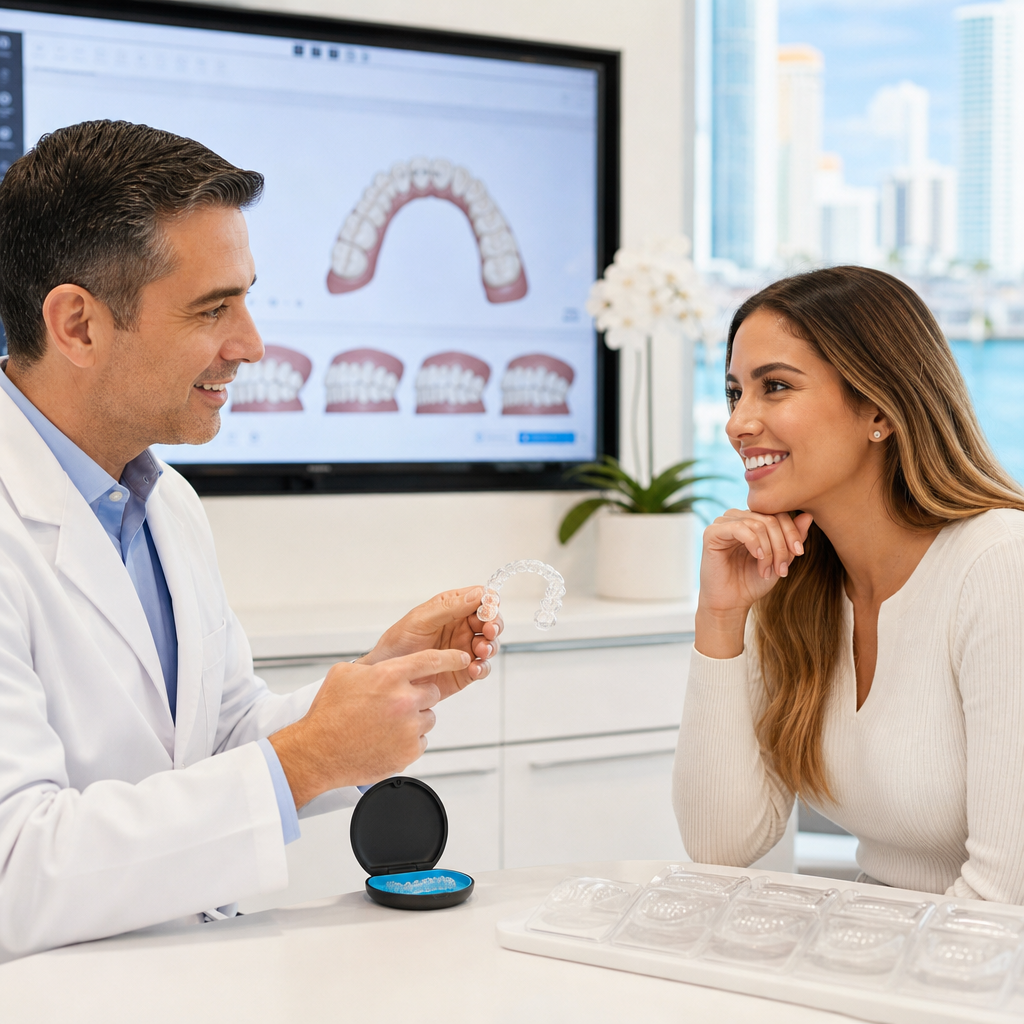
Your first checkpoint visit (usually around week 4) is critical. We verify that your teeth are tracking correctly and that you’re on pace with your treatment plan. If we spot any deviation, we can address it immediately rather than waiting until misalignment compounds. Many patients find that this early reassurance gives them confidence to maintain compliance throughout the entire treatment course.
During month one, establish your routine: designate a specific place for your aligners when not wearing them, set phone reminders for wear time, and plan your meals around your aligner schedule. These small habits prevent loss, reduce wear-time lapses, and keep you progressing smoothly.
Actionable takeaway: Create a phone calendar reminder for your aligner changes and your checkpoint appointment right now, eliminating the need to remember later.
Mid-Treatment Checkpoints and Adjusting Your Progress
Around the halfway point of your treatment, we conduct a thorough assessment of your overall progress. By this stage, you’ve worn roughly half your aligner trays, and we can confidently predict whether you’ll reach your final result on schedule or if adjustments are needed.
Mid-treatment checkpoints serve several purposes. We verify that bite correction is tracking as planned, ensure no unexpected tooth movement is occurring, and assess whether your compliance has remained consistent. If you’ve had some lapses in wear time, this is where we can adjust your plan to compensate without derailing your results entirely.
Sometimes, we discover that your teeth have responded even faster than anticipated. In these cases, we may compress the remaining timeline slightly, allowing you to finish ahead of schedule. Other times, we identify that a specific tooth is moving more slowly than expected, so we may recommend wearing a tray slightly longer or adding targeted pressure with refinement aligners later.
Honest communication during mid-treatment visits keeps you aligned with your goals. If you’ve struggled with wear time, tell us. If you’re experiencing unexpected discomfort, let us know. We adapt your plan based on real-world progress, not wishful thinking.
Actionable takeaway: Bring a notebook to your mid-treatment visit and document any adjustments we recommend, plus your revised completion timeline.
How Our Advanced 3D Imaging Accelerates Your Results
Our X-MIND PRIME 3D digital imaging system provides unprecedented clarity into your tooth positions and bite dynamics. This technology doesn’t just diagnose your starting point; it continuously informs your treatment adjustments and helps us optimize your timeline.
With 3D imaging, we create a virtual model of your teeth at every stage of treatment. This allows us to predict potential complications before they occur and make micro-adjustments to your aligner sequence if needed. If we anticipate that a particular tooth will need extra attention, we can program that into your subsequent trays, preventing delays down the road.
The precision of 3D imaging also means we can identify when you’re ready to transition to your next set of aligners before discomfort becomes an issue. Traditional orthodontics relies heavily on intuition and experience; our technology adds a layer of objective measurement that accelerates safe, predictable tooth movement.
Patients often remark that seeing their 3D treatment projection helps them stay motivated. Visualizing your future smile at the start of treatment transforms it from an abstract goal into a concrete, achievable destination. That clarity fuels compliance and patience through the entire aligner orthodontics journey.
Actionable takeaway: Ask us to explain your 3D projection in detail and request a copy of your treatment plan to reference whenever motivation dips.
Maintaining Aligner Compliance for On-Schedule Results
Aligner compliance means wearing your trays for the prescribed 20-22 hours daily and changing them on the exact schedule we recommend. This is the single most important factor determining whether you finish on time. We’ve never met a patient who skipped wear hours and maintained their original timeline.
Create practical systems that support consistent wear:
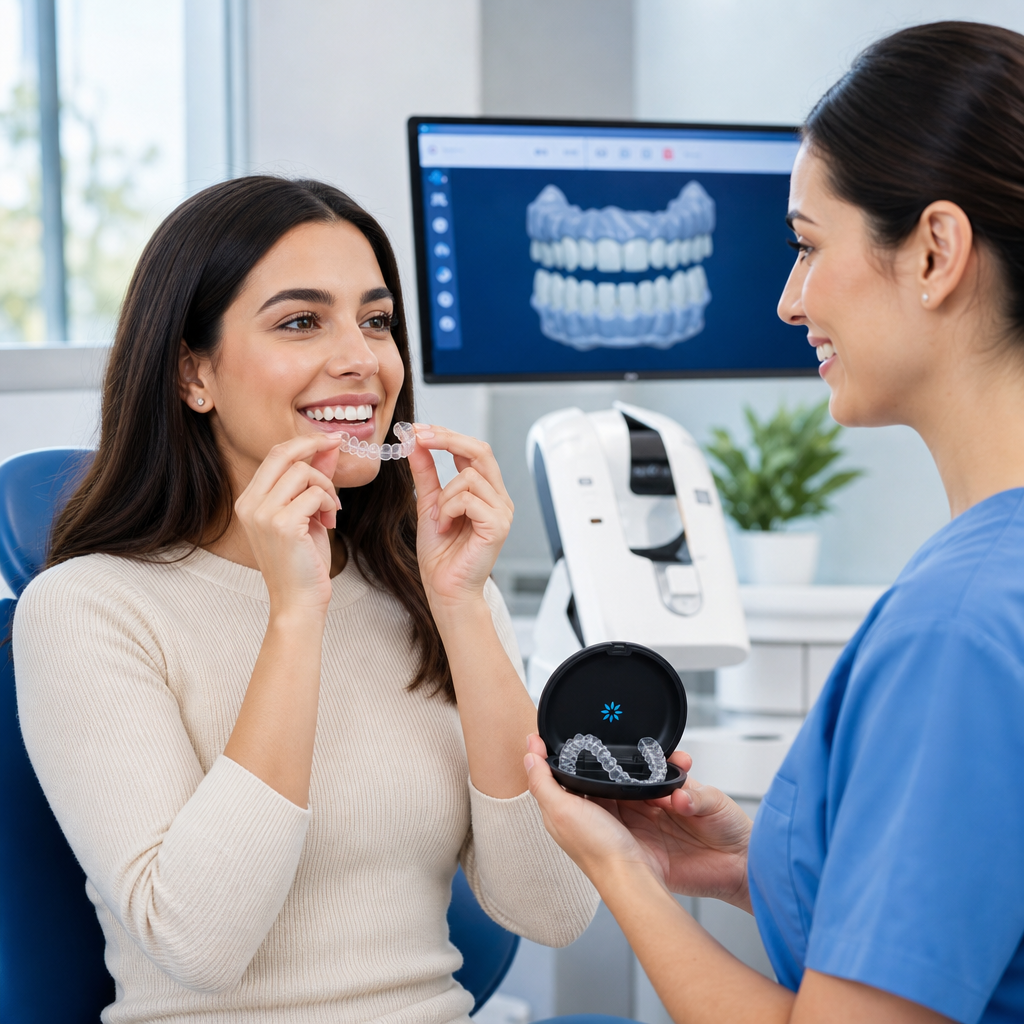
- Wear aligners while working, running errands, and during most daily activities; remove only for eating, drinking anything except water, and oral hygiene
- Clean aligners daily with a soft toothbrush and lukewarm water to prevent discoloration and odor
- Store aligners in their case when not in use to avoid loss or damage
- Set a phone calendar reminder for aligner changes so you don’t accidentally skip a tray
- Keep backup aligners in your car, office, or bag in case you forget your current set while traveling
Compliance builds momentum. When you hit your tray-change schedule consistently, you feel progress and gain confidence. This positive reinforcement naturally encourages continued adherence. Conversely, even small gaps in wear time add days or weeks to your total treatment duration because your teeth partially revert when aligners aren’t applying force.
Actionable takeaway: Identify your three biggest potential wear-time obstacles (work events, social situations, travel) and plan specific strategies to keep your aligners in before each scenario occurs.
Common Timeline Delays and How to Avoid Them
Lost or damaged aligners are the most common cause of treatment delays. A cracked tray can’t be worn, and ordering a replacement takes 7-10 days. Avoid this by keeping aligners in their protective case whenever they’re not in your mouth. If an aligner breaks, contact us immediately; we maintain backup copies that can get you back on schedule faster than reordering from the manufacturer.
Inconsistent wear time stretches treatment timelines significantly. If you wear aligners only 16-18 hours daily instead of the prescribed 20-22 hours, each tray phase extends, pushing your completion date further out. Some patients don’t realize that a 2-4 hour daily shortfall compounds dramatically over months.
Skipped checkpoint appointments delay progress identification and intervention. If we can’t visually confirm your teeth are tracking correctly, we can’t adjust your plan or catch problems early. We recommend scheduling all checkups before you leave our office, eliminating the chance of “forgetting” to book.
Dietary choices also impact your timeline indirectly. Sticky or hard foods that damage aligners force replacements and pauses in treatment. Similarly, inconsistent oral hygiene can lead to plaque buildup under aligners, causing gum inflammation and halting treatment temporarily. Brush and floss diligently between every meal before reinserting your aligners.
Actionable takeaway: Place your aligner case next to your toothbrush so reinsertion happens immediately after meals, minimizing the time they spend outside your mouth and the risk of loss.
What to Expect During Your Final Refinement Phase
As you approach the end of your primary aligner series, your teeth are nearly where they need to be. However, fine-tuning often requires a refinement phase using additional custom-made aligners that target any remaining minor misalignments or bite adjustments.
Refinement typically adds 2-4 months to your total treatment timeline, though we include this possibility in your initial treatment estimate. Think of refinement as the difference between a good result and an exceptional one. Your teeth may look straight to the naked eye, but refinement ensures your bite is balanced, your smile is centered, and every tooth is positioned precisely for long-term stability and aesthetics.
During refinement, we use our advanced diagnostic tools to measure micro-movements and design aligners that address the remaining millimeters of movement needed. Wear time and compliance remain just as important during this phase. Many patients are eager to finish and occasionally slip on their schedule here, inadvertently extending this final phase.
The refinement phase is also when we assess your bite relationship under different jaw positions. If we notice any asymmetries or functional concerns, we make subtle adjustments now to ensure your bite functions optimally when treatment concludes.
Actionable takeaway: Mentally prepare for refinement during your initial consultation so the concept isn’t surprising later; it’s a sign your case is progressing exactly as planned.
Post-Treatment Retention: Protecting Your New Smile
Your clear aligner treatment officially concludes when your final aligner comes off, but your retention phase is equally critical to your timeline success and long-term results. Without proper retention, teeth naturally drift back toward their original positions, undoing months of careful orthodontic progress.

We prescribe retainers immediately after active aligner treatment ends. Most patients receive a combination of a fixed wire retainer bonded to the back of their front teeth plus removable clear retainers worn nightly. The fixed retainer provides 24/7 stability, while the clear retainers allow for flexibility and ease of cleaning.
Your retention timeline commitment is lifelong. During the first 6-12 months post-treatment, we recommend wearing your removable retainers every night. After that initial year, most patients can transition to wearing them 3-4 nights per week, though we customize this based on your bite characteristics and drift tendency.
Skipping retainer wear is the most common reason people lose their aligner results and end up needing repeat treatment years later. When you’ve invested months in achieving your ideal smile, protecting that outcome is worth a few minutes of nightly wear.
Actionable takeaway: Set a recurring phone reminder for retainer wear starting on your treatment completion date so the habit sticks immediately rather than fading over time.
Real Timeline Results from Our Miami Patients
Our Miami patients consistently achieve their smile goals on schedule because they embrace the strategic timeline approach from day one. We’ve guided patients through straightening teeth timelines ranging from 7 months for mild cases to 16 months for complex reconstructions, and the pattern is always the same: compliance determines outcomes.
One North Miami Beach patient completed her treatment in exactly 9 months because she maintained perfect wear-time discipline and never missed a checkpoint. She wore her aligners faithfully, attended every appointment, and appreciated that we adjusted her refinement phase based on her rapid response to treatment. Her smile transformation dramatically improved her confidence in professional settings, and her bite now functions optimally.
Another patient in Miami Beach required 14 months due to significant crowding and bite correction needs. Her timeline felt long initially, but she stayed committed because we showed her the month-by-month projection of her improving smile. When her treatment concluded, she felt the timeline had been worthwhile and her results reflected our detailed planning and her consistent effort.
These real outcomes share a common ingredient: realistic expectations combined with actionable compliance strategies. When patients understand their personalized timeline and embrace it as their roadmap, they experience fewer surprises and greater satisfaction with their results.
Actionable takeaway: Ask to see before-and-after photos of patients with similar complexity to yours so you understand realistic timelines for your specific situation.
For further reading: Clear aligners overview.
Frequently Asked Questions (FAQ)
How long does clear aligner treatment typically take at our practice?
We customize each treatment timeline based on your specific alignment needs, but most of our patients complete their clear aligner journey in 6 to 18 months. Our advanced X-MIND PRIME 3D digital imaging allows us to map out your precise treatment duration from day one, so you’ll know exactly what to expect. The timeline depends on factors like the complexity of your case, how consistently you wear your aligners, and how your teeth respond to the gradual movement we’ve planned.
What happens if my treatment falls behind schedule?
We monitor your progress at regular checkpoints throughout your treatment and adjust your plan if needed to keep you on track. If we notice delays, we’ll discuss the cause with you, whether that’s inconsistent aligner wear or unexpected tooth movement, and determine the best path forward. Our goal is ensuring you achieve your straightened smile within the timeline we established, and we’re here to support you every step of the way.
How important is it to wear my aligners exactly as directed?
Wearing your aligners for the recommended 20 to 22 hours daily is absolutely critical to staying on schedule, since even a few hours missed each day can significantly extend your treatment. We’ve seen patients who maintain strict compliance complete their treatment right on time, while those who skip wearing them regularly experience delays. We’re here to help you develop habits that keep your treatment moving forward smoothly toward your new smile.