

Table of Contents
- 1. Superior Stability and Retention Compared to Traditional Removables
- 2. Preserving Jawbone Health and Structure
- 3. Enhanced Chewing Function and Comfort
- 4. Improved Speech and Confidence with Implant Support
- 5. Long-Term Cost Effectiveness and Durability
- 6. Our Advanced CEREC Technology for Same-Day Solutions
- 7. Maintenance and Care Tips for Optimal Results
- Frequently Asked Questions (FAQ)
1. Superior Stability and Retention Compared to Traditional Removables
When you’re missing teeth in your lower jaw, the decision between traditional removable dentures and implant-supported alternatives shapes your quality of life for years to come. We work with patients across North Miami Beach, Miami, and Miami Beach who’ve struggled with loose, uncomfortable dentures that slip during meals or conversations. The good news: implant-supported dentures offer a transformative solution that many of our patients wish they’d chosen sooner.
At Smile Expert Design Center, we’ve guided hundreds of patients through this choice using advanced diagnostics and personalized treatment planning. This guide breaks down why implant-supported solutions stand apart and how our comprehensive approach delivers results that restore both function and confidence.
Traditional lower dentures rely on suction and gravity to stay in place, which means they shift and move throughout the day. Even well-fitted conventional dentures lose 25-30% of their retention within the first year as your jawbone naturally resorbs. Patients describe the frustration: clicking sounds during conversation, needing to reposition the denture mid-bite, or worse, experiencing it slipping unexpectedly in public.
Implant-supported dentures anchor to dental implants surgically placed in your jawbone, creating a locked-in feel similar to natural teeth. Two to four strategically positioned implants provide the stability you need without the constant worry. You eat, laugh, and speak with genuine confidence.
The clinical advantage is clear: implant retention eliminates denture movement, which also reduces soft tissue irritation under the denture base. Patients report eating a wider variety of foods comfortably and speaking without concern. We typically recommend a two-implant minimum for lower jaw cases, though your specific anatomy and goals guide our recommendation during your consultation.
What to do next: Schedule a consultation so we can evaluate your jawbone density and discuss how many implants suit your needs and lifestyle.
2. Preserving Jawbone Health and Structure
Bone loss is the silent consequence of tooth loss. When teeth are gone, the jawbone beneath them no longer receives the stimulation it needs to maintain its structure. Traditional dentures sit on top of shrinking bone, which is why many long-term denture wearers develop a sunken facial appearance over 10-15 years.
Dental implants function like natural tooth roots, transmitting chewing forces directly into the bone and triggering the body’s natural maintenance process. This stimulation preserves bone volume and density, maintaining your facial contours and supporting structures around your mouth.
We use X-MIND PRIME 3D digital imaging to assess your current bone volume and plan implant placement with surgical precision. This advanced technology allows us to visualize bone architecture in three dimensions, helping us determine if bone grafting might strengthen your foundation before implant placement. Many patients find this imaging reassuring because they can see exactly what we’re working with.
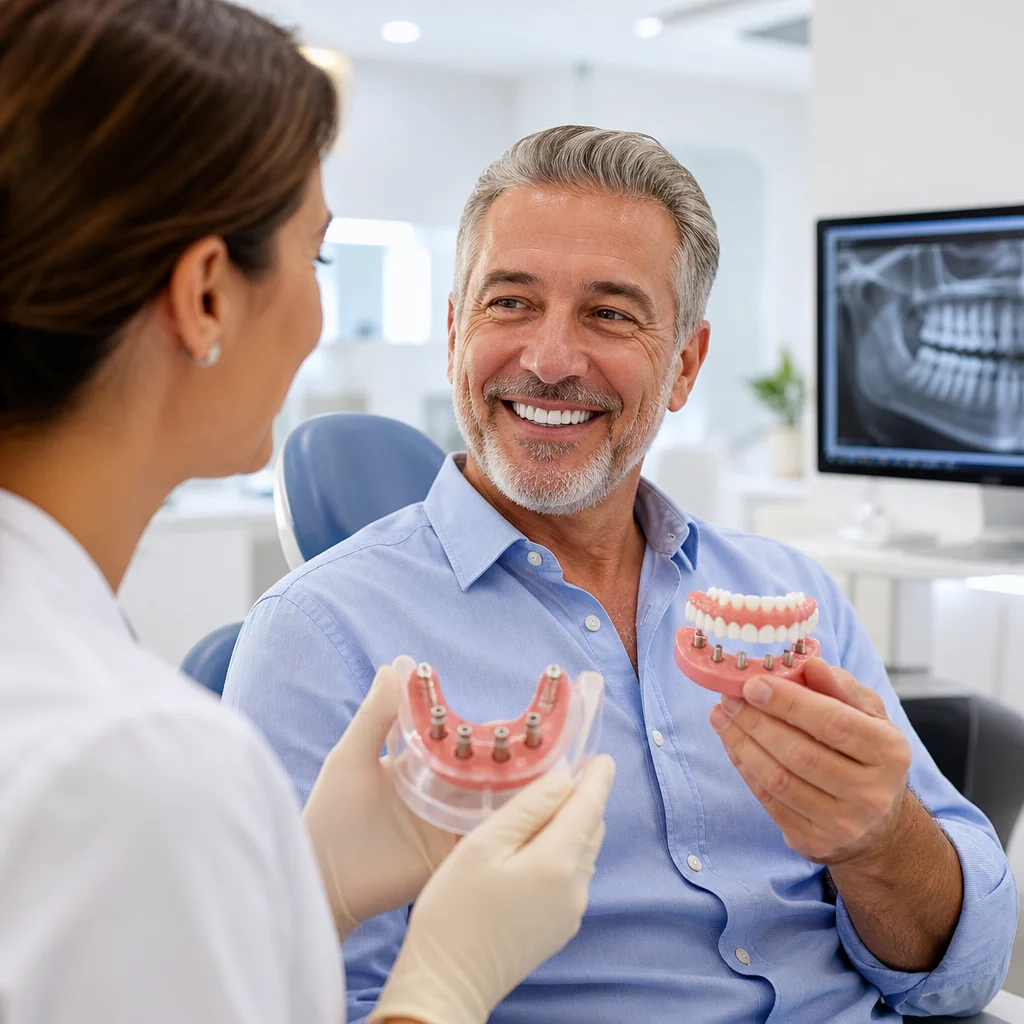
The long-term payoff extends beyond aesthetics. Preserved bone supports better implant stability and reduces the likelihood of complications over decades. Your facial structure remains youthful and defined, without the aged appearance that often comes with progressive bone loss.
What to do next: Ask about our 3D imaging during your initial exam so we can show you your bone profile and discuss preservation strategies specific to your case.
3. Enhanced Chewing Function and Comfort
Eating matters. Traditional dentures typically restore only 20-30% of the chewing force of natural teeth, forcing patients to modify their diet or chew slowly and carefully. Sticky foods, nuts, crunchy vegetables, and tough meats become off-limits or require laborious processing.
Implant-supported dentures typically restore 60-80% of natural chewing capacity. You can bite into an apple, enjoy a steak, or crack a nut without thinking about it. This functional restoration translates directly into better nutrition and genuine food enjoyment.
The comfort advantage matters equally. Traditional dentures often create sore spots where the denture base rubs against soft tissue, especially during chewing. Over-the-counter denture creams and constant adjustments become part of daily life for many patients. Implant-supported systems eliminate that friction and irritation because the denture is locked in place.
We’ve treated patients who spent years avoiding their favorite foods, only to rediscover eating pleasure after implant placement. One patient told us she’d nearly forgotten what fresh corn on the cob tasted like. That kind of life quality improvement drives our commitment to this treatment approach.
What to do next: During your consultation, discuss the specific foods you miss or currently struggle with; we’ll assess whether implant support restores function for your particular goals.
4. Improved Speech and Confidence with Implant Support
Loose dentures often cause clicking, whistling, or slurring during speech. The denture base also replaces roof-of-mouth tissue, which affects how sounds resonate. Many patients become self-conscious and speak less enthusiastically, avoiding public situations or social gatherings.
Implant-supported dentures feel stable during conversation because they’re anchored securely. Some implant-supported designs can be smaller or reduce palatal coverage, improving speech clarity even further. Your voice sounds natural because your mouth mechanics work closer to their pre-tooth-loss baseline.
Beyond function, the psychological shift is profound. Patients report standing taller, speaking more confidently, and re-engaging socially. One patient described it as “getting her voice back.” That transformation reflects how intrinsically tied oral function is to self-image and social presence.
We design every treatment with both clinical function and emotional wellbeing in mind. Your new smile will be improved dramatically, but equally important is how that improvement affects your daily interactions, professional presence, and overall confidence.
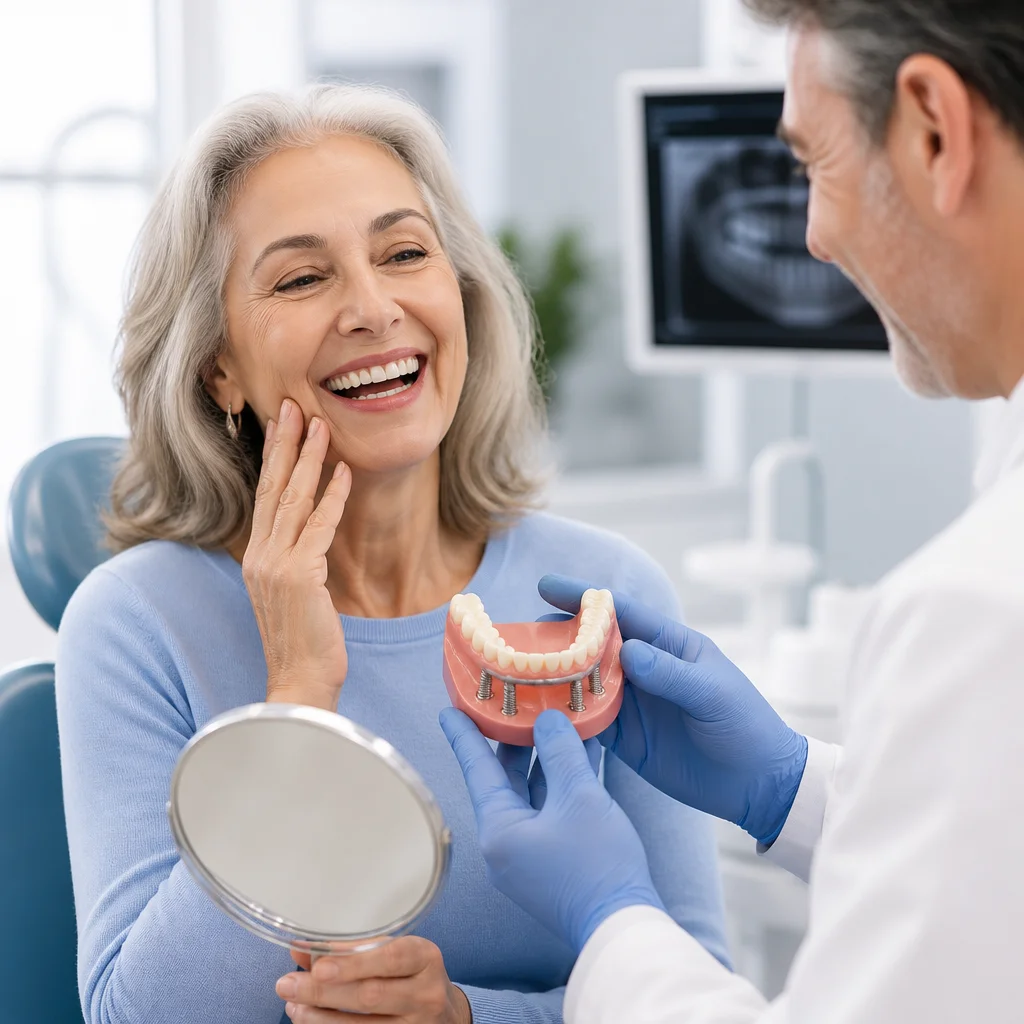
What to do next: Share your concerns about speech or social confidence during your consultation; these details help us tailor the design and treatment plan to restore your natural communication style.
5. Long-Term Cost Effectiveness and Durability
Implant-supported dentures require higher initial investment than traditional dentures, typically ranging from $15,000 to $30,000 depending on implant number, bone grafting needs, and specific design. This cost difference often pauses decision-making for our patients.
Here’s the economic reality: traditional dentures require replacement every 7-10 years as they wear down and bone loss forces new adjustments. A patient over 20 years may invest $30,000-$50,000 in replacements, adjustments, denture creams, and related care. Implant-supported dentures, when properly maintained, often last 15-20+ years with the implants lasting a lifetime.
We offer flexible financing through CareCredit and Lending Club to make implant treatment accessible without straining your budget. Many patients find monthly payments more manageable than they expected.
The durability advantage includes predictability. You’re not adjusting to new dentures repeatedly or wondering how much bone you’ve lost. Your treatment plan creates a stable, known outcome. Insurance coverage varies by policy; we’ll review your benefits and help you understand out-of-pocket costs upfront.
What to do next: Contact our office to discuss financing options and get a detailed cost comparison between traditional dentures and implant-supported solutions for your specific case.
6. Our Advanced CEREC Technology for Same-Day Solutions
When you need denture adjustments, repairs, or replacements, speed and precision matter. Our practice invested in CEREC same-day restorations technology specifically to reduce patient wait times and improve restoration quality.
While full implant-supported dentures require a treatment timeline of several months (to allow implants to integrate with bone), CEREC enables us to fabricate crowns, veneers, and other restorations in a single visit. If your implant-supported denture needs an individual crown component or aesthetic refinement, we can often complete that adjustment the same day.
Our team uses advanced decay detection with SOPROLIFE technology to catch any issues early, preventing complications that might otherwise delay treatment. This proactive approach keeps your implant restoration functioning at peak performance.
The combination of implant planning precision, 3D imaging, and same-day restoration capabilities means we deliver comprehensive care without unnecessary repeat visits. You get results faster and with less disruption to your schedule.
What to do next: Ask about our same-day restoration capabilities during your implant consultation; knowing we can handle adjustments quickly provides peace of mind for long-term care.
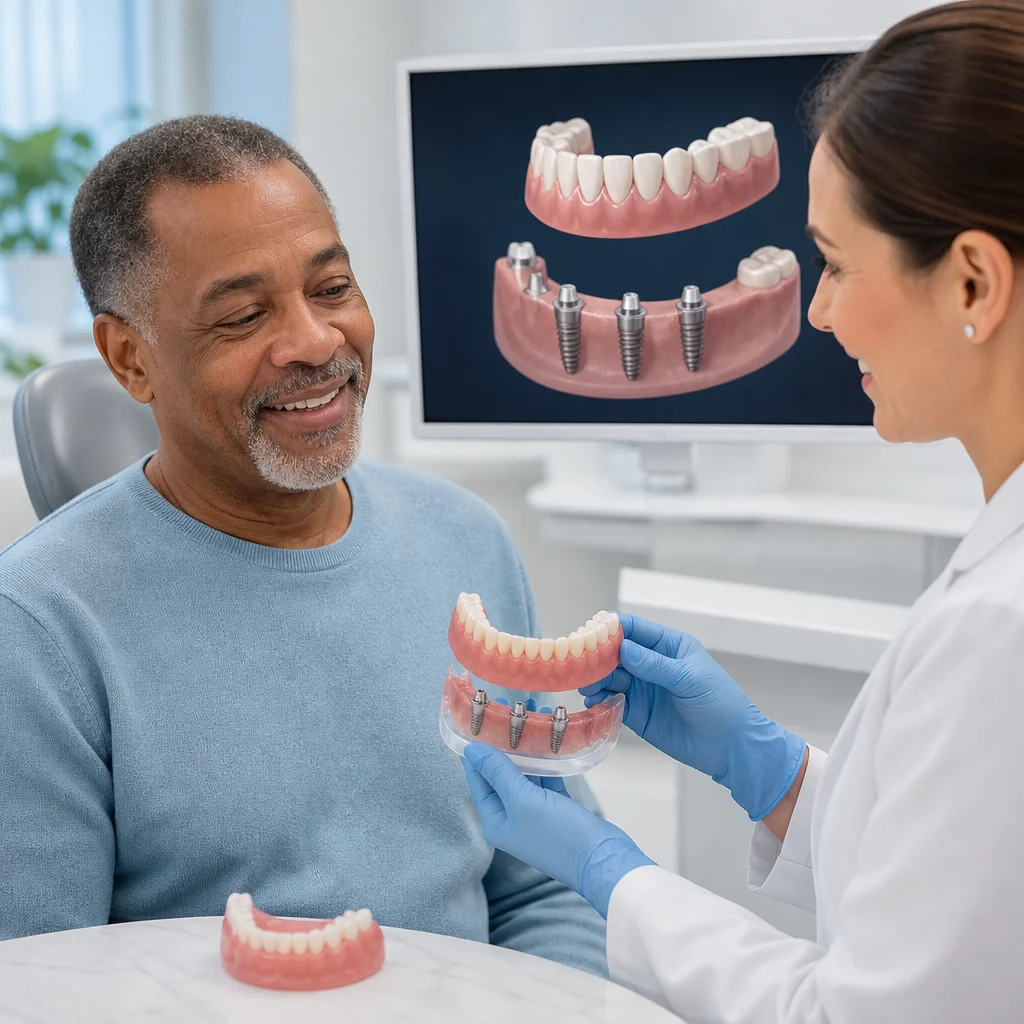
7. Maintenance and Care Tips for Optimal Results
Implant-supported dentures require less daily maintenance than traditional dentures but demand consistency to ensure longevity. Unlike removable traditional dentures, some implant-supported designs attach to implants and stay in place; others remain removable but with secure locking mechanisms.
Daily care involves gentle brushing around implant sites (similar to implant care) and typically brief soaking of the denture base if it’s removable. We provide detailed home care instructions tailored to your specific design during placement.
Professional care is equally important. Plan for checkups every six months so we can monitor implant health, assess bone levels with our advanced imaging, and address any wear or adjustments before problems develop. Early intervention prevents costly complications and extends your restoration’s lifespan.
Avoid hard chewing on non-food items, wear a nightguard if you grind your teeth, and follow our nutritional and care guidelines. These practical habits protect your significant investment and ensure your new smile delivers consistent confidence for decades.
We’re here as your ongoing partner. Our 24/7 emergency dental services ensure that if any issue arises outside regular hours, you can reach us immediately. That’s the kind of comprehensive support we believe you deserve when you’ve invested in restoring your smile.
What to do next: Schedule your initial consultation to discuss implant-supported dentures for your lower jaw. We’ll use advanced 3D imaging, review your health history, and create a personalized treatment plan that fits your timeline and budget. Dr. Jean-Jacques Edderai and our team are fluent in English, Spanish, French, Italian, and Portuguese, ensuring clear communication throughout your care. Contact Smile Expert Design Center today to take the first step toward eating, speaking, and smiling with the confidence you deserve.
Frequently Asked Questions (FAQ)
What makes lower jaw implant-supported dentures better than traditional removable dentures?
We find that implant-supported dentures offer dramatically superior stability because they’re anchored directly into your jawbone, whereas traditional dentures simply rest on your gums and can shift during eating or speaking. Our patients experience significantly better chewing function, improved speech clarity, and enhanced confidence knowing their teeth won’t move unexpectedly. Additionally, implant-supported solutions help preserve your jawbone structure over time, preventing the bone loss that typically occurs with removable dentures.
Can we place implant-supported dentures in a single visit?
We can complete your restoration quickly using our advanced CEREC technology and same-day porcelain solutions, though the complete implant integration process typically requires several months as your jawbone fuses with the implants. During this healing period, we provide you with temporary solutions so you’re never without teeth. Once osseointegration is complete, we attach your custom-designed denture to create a permanent, secure restoration.
How do we help patients afford implant-supported dentures?
We understand implant treatment represents a significant investment, which is why we offer flexible financing through CareCredit and Lending Club to make our advanced restorative options accessible to our patients. We can also discuss treatment plans that allow us to place implants and restorations in phases based on your budget and timeline. We’re committed to working with you to find a solution that fits both your clinical needs and financial situation.