

Table of Contents
- Why Root Canal Treatment Requires Immediate Restoration
- Understanding the Vulnerability of Root Canal Treated Teeth
- Our Comprehensive Restorative Approach at Smile Expert Design Center
- One-Visit CEREC Porcelain Crowns for Immediate Restoration
- Advanced Imaging Technology Guides Our Restoration Planning
- Custom Restoration Options Beyond Traditional Crowns
- The Restoration Timeline and What to Expect
- Protecting Your Investment with Proper Aftercare
- Financing Your Restorative Treatment
- Why Patients Choose Our Expert Restorative Team
- Frequently Asked Questions (FAQ)
Why Root Canal Treatment Requires Immediate Restoration
A root canal saves your tooth, but restoration completes the job. After Dr. Edderai and our team remove the infected pulp and seal the canal system, your tooth enters a vulnerable phase. The structure has been compromised, and without proper restoration, even a successfully treated tooth can fail within months or years. That’s why we view root canal therapy and restoration as a single treatment journey at Smile Expert Design Center.
This guide walks you through everything you need to know about restoring your tooth after endodontic treatment, from why timing matters to how our advanced technology ensures your restored tooth looks natural and functions for decades.
Your tooth’s survival depends on what happens after the root canal itself is complete. During endodontic therapy, we remove the infected or damaged pulp tissue inside your tooth, leaving behind a hollow structure that’s weaker than it was originally. Think of it like removing the interior support from a building—the walls still stand, but they’re at risk without reinforcement.
Teeth that have undergone root canal treatment lose moisture and become more brittle over time. Without a restoration that fully encases and protects the tooth, bacteria can seep back in through the opening, causing reinfection. Additionally, the tooth continues to experience biting forces every day. A restored tooth needs a durable covering that distributes these forces evenly, preventing cracks or fractures that could require extraction.
We recommend scheduling your restoration appointment within one to two weeks of completing your root canal. Delaying restoration increases the risk of reinfection and structural failure. At our practice, many patients complete both the root canal and restoration in our office, minimizing disruption to their schedule while maximizing the tooth’s protection.
Understanding the Vulnerability of Root Canal Treated Teeth
Root canal treated teeth behave differently than vital teeth, and understanding these changes helps you appreciate why our restoration approach is comprehensive. Once we remove the pulp, the tooth no longer has a blood supply flowing through the dentin tubules. This deprives the tooth of nutrients and hydration it needs to maintain its flexibility.
Over months and years, endodontically treated teeth become increasingly prone to cracking. A small hairline fracture might not cause immediate symptoms, but it can spread over time, eventually requiring extraction. We’ve seen patients who felt fine for months after a root canal, only to experience sudden pain from a crack that developed silently.
Color changes occur in restored teeth as well. The natural color darkens slightly because the internal blood supply is gone. Our restorations account for this by matching not just your current tooth shade but also the shade of the restoration itself, ensuring your smile looks uniformly bright and natural.
The loss of proprioception, the tooth’s ability to sense how much force is being applied during chewing, is another consideration. Patients sometimes bite harder on treated teeth because they can’t feel pressure the same way, which puts additional stress on the restoration. We educate our patients about this so they can be mindful during eating.
Our Comprehensive Restorative Approach at Smile Expert Design Center
We don’t view restoration as an afterthought to root canal therapy. From the moment we diagnose that you need a root canal, we’re already planning your restoration. This integrated approach means choosing the right restoration type before we even begin endodontic treatment, ensuring the final result meets your functional and aesthetic goals.
Our team evaluates several factors when planning your restoration:
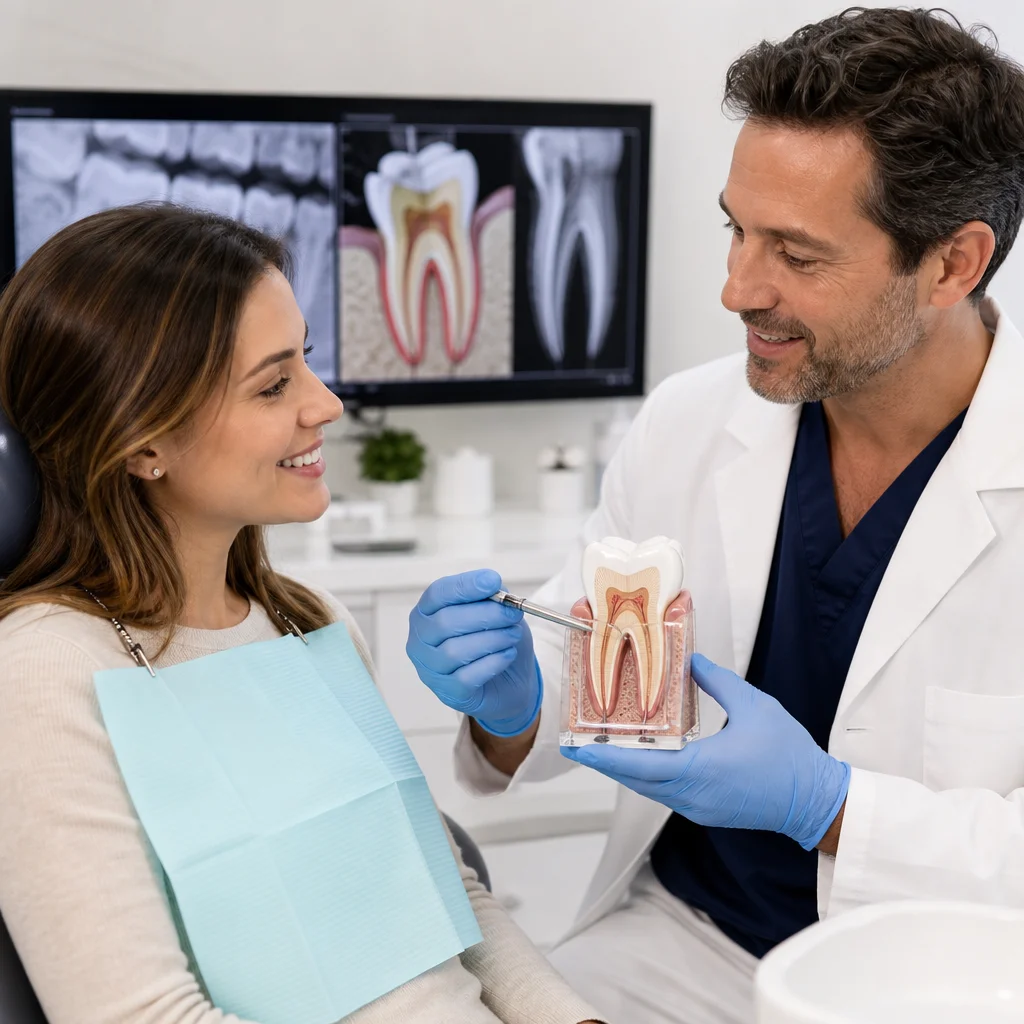
- The amount of tooth structure remaining after the root canal
- The tooth’s location (front teeth versus molars have different requirements)
- Your bite and chewing patterns
- Your aesthetic goals and concerns
- The longevity you want from your restoration
For many patients, a dental crown is the ideal choice because it fully encases the treated tooth, providing maximum protection and durability. However, we also offer composite restorations, inlays, and onlays for teeth with minimal loss of structure.
Our X-MIND PRIME 3D digital imaging technology gives us a precise three-dimensional view of the tooth, the root canal treatment, and the surrounding bone. This allows us to design a restoration that not only protects your tooth but also harmonizes with your bite and other teeth. We involve you in this planning process, explaining options and answering questions before you commit to a treatment plan.
One-Visit CEREC Porcelain Crowns for Immediate Restoration
One of the most significant advances we’ve brought to our practice is same-day crown technology. Our CEREC crowns system allows us to design, mill, and place a high-strength porcelain crown in a single appointment. For patients with root canal treated teeth, this means you leave our office with your restoration complete, without the need for temporary crowns or multiple visits.
CEREC crowns are milled from a single block of porcelain, creating a restoration that’s incredibly strong and aesthetically superior to traditional lab-made crowns. The porcelain is color-matched to your surrounding teeth, and we can adjust the shade, contour, and translucency to achieve a result that looks like your natural tooth.
The process begins with our digital scanner capturing a precise image of your prepared tooth. Our milling unit then fabricates the crown while you’re in our office, typically within 15-20 minutes. We try the crown, verify your bite, and make any minor adjustments. Once perfected, we bond it permanently to your tooth using advanced adhesive techniques.
For root canal treated teeth, CEREC crowns offer the perfect combination of strength and beauty. The restoration protects your tooth from reinfection while providing the aesthetic result you deserve. Many patients tell us they forget which tooth had the root canal because the restoration blends so seamlessly.
Advanced Imaging Technology Guides Our Restoration Planning
Our X-MIND PRIME 3D imaging system generates detailed three-dimensional reconstructions that show us exactly how your tooth is positioned, where the root canal filling ends, and how much bone supports the tooth. This level of detail is impossible with traditional two-dimensional X-rays, and it fundamentally changes how we plan restorations.
With 3D imaging, we can visualize the margin of your crown placement, ensuring it sits just below your gum line where it will be stable and invisible. We can also assess the length of the remaining root to determine if additional support, such as a post and core, is necessary for retention.
Our SOPROLIFE decay detection technology works alongside imaging to identify any areas of demineralization or marginal leakage around existing restorations. If you’re replacing an old crown on a tooth that previously had a root canal, this technology helps us ensure the new restoration starts with a completely clean foundation.
The combination of advanced imaging and decay detection means fewer surprises during treatment. We know exactly what we’re working with before we begin, and we can communicate clearly with you about what to expect. This precision also reduces chair time and improves the longevity of your restoration.
Custom Restoration Options Beyond Traditional Crowns
While crowns are the most common restoration after root canal therapy, they’re not the only option. Depending on how much tooth structure you still have, we may recommend other solutions that are equally protective but less invasive.
An inlay is a restoration that fits inside the grooves and cusps of your tooth, similar to a very large filling. It provides excellent protection if you’ve lost some structure but retain strong walls and sufficient remaining tooth. Inlays are often used on teeth that had decay or damage along with the root canal problem.
An onlay covers the cusp tips and incisal edges along with the internal anatomy, offering more coverage than an inlay but less than a crown. This option works well for teeth where we want to preserve as much of your natural structure as possible while ensuring complete protection of the canal-treated area.
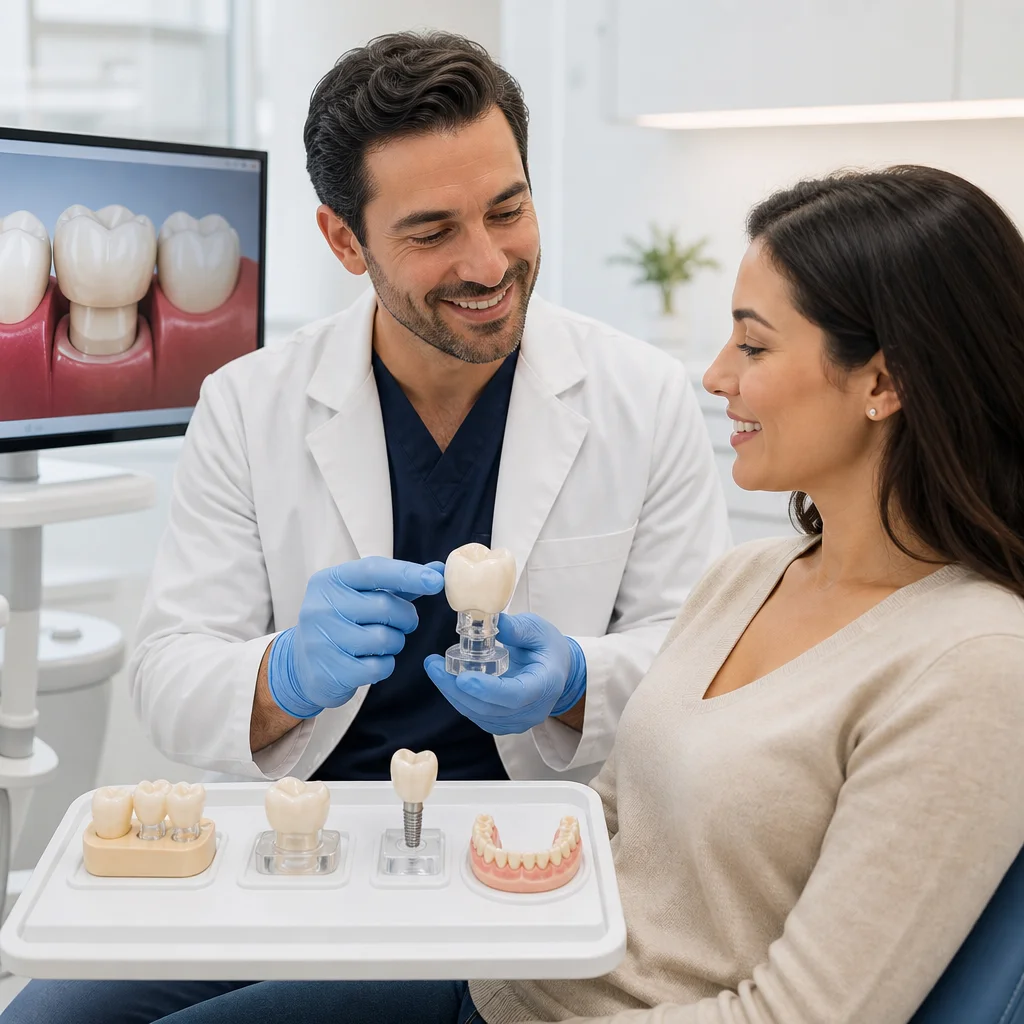
Composite restorations, made from tooth-colored resin material, can work for anterior teeth with minimal structural loss. These are less durable than crowns or porcelain inlays, but they’re more affordable and require less tooth preparation. We discuss the longevity tradeoff with you so you can make an informed choice.
We create custom restorations for each tooth based on its specific anatomy, not a one-size-fits-all template. This personalization ensures your restoration not only protects your tooth but also looks like it belongs in your smile.
The Restoration Timeline and What to Expect
Understanding the timeline helps you prepare mentally and logistically for your restoration. Most restorations following root canal therapy happen quickly, especially with our same-day CEREC technology.
If you’re receiving a same-day crown, expect one appointment lasting about two hours. We’ll begin by checking that your root canal healing is progressing normally. Next, we prepare the tooth by removing decay, old restorations, and excess tooth structure to create the right shape for your crown. This preparation is gentle and controlled, using local anesthesia to ensure complete comfort.
Once prepared, we scan your tooth with our digital scanner. You might watch as the computer generates a three-dimensional model of your tooth on our monitor. We’ll show you the design and make sure the shade is exactly what you want. Then, while our CEREC milling unit creates your crown, you can relax, have a beverage, or answer emails.
When your crown is ready, we try it in your mouth to verify the fit, bite, and appearance. We make any fine adjustments needed to ensure it feels natural when you chew and speak. The crown is then bonded with a strong dental adhesive, and your restoration is complete.
If you choose a traditional lab-made restoration, the timeline extends to 10-14 days. We’ll place a temporary crown immediately after your root canal is complete, ensuring your tooth is protected and functional while the lab fabricates your permanent restoration. At your second appointment, we remove the temporary, try in the permanent restoration, and bond it in place.
Protecting Your Investment with Proper Aftercare
Your restored tooth is strong, but it still deserves care to remain healthy for decades. Aftercare begins immediately after your restoration is placed and continues for the life of your tooth.
For the first 24 hours after bonding, avoid sticky foods like caramel or taffy that could stress the restoration. Stay away from extremely hard items like ice or nuts that could crack the crown. These cautions are temporary and usually just for the first few days until the adhesive fully sets.
Long-term care is straightforward. Brush twice daily with a soft-bristled toothbrush, paying special attention to the area where your crown meets your natural tooth. This is where bacteria can accumulate if plaque isn’t removed. Floss daily, including under the crown where food can hide. Some patients worry about damaging their crowns with floss, but proper flossing is essential for protecting the underlying tooth and supporting structures.
Avoid using your teeth as tools to open packages or crack shells. If you clench or grind your teeth at night, ask us about a night guard. The protective cushioning prevents excessive force on your restoration and your other teeth.
Come in for regular checkups and professional cleanings every six months. During these visits, we inspect your restoration for any signs of wear, check your bite, and ensure the margins remain sealed. Catching small issues early prevents major problems later.
Some patients ask about the lifespan of their restoration. A high-quality porcelain crown typically lasts 10-20 years or longer with excellent care. We’ve placed crowns that functioned beautifully for over 25 years. The variation depends on your bite, your oral habits, and how well you maintain your restoration and underlying tooth.
Financing Your Restorative Treatment
Cost should never be the reason to delay protecting your root canal treated tooth. We offer flexible financing options that make quality restorations accessible.
CareCredit provides a credit card specifically for healthcare expenses, including dental treatment. You can use it immediately and choose from multiple payment plans, many offering interest-free periods if you pay in full within a set timeframe. Lending Club offers personal loans that can cover your dental costs with rates and terms based on your creditworthiness.
We also work with most dental insurance plans. Many insurance policies cover a portion of crown costs, typically 50% after your deductible is met. We’ll verify your coverage before treatment so there are no surprises at checkout. If your insurance has annual maximum benefits, we coordinate treatment timing to maximize your benefits.
For uninsured patients, we offer treatment plans that break costs into manageable monthly payments. Our front desk team will discuss all available options with you and help you select the plan that fits your budget.
Why Patients Choose Our Expert Restorative Team
Dr. Jean-Jacques Edderai leads our restorative treatment with extensive training in prosthodontics, the specialty focused on creating restorations that are beautiful, functional, and durable. His expertise in smile design means your restoration doesn’t just protect your tooth; it enhances your entire smile.
Our team at Smile Expert Design Center is dedicated to making your experience comfortable and stress-free. We understand that endodontic treatment can be anxiety-producing, and we approach restoration with patience and clear communication. We explain every step and answer your questions thoroughly.
We invest in technology because we know it delivers better results. Our X-MIND PRIME 3D imaging, SOPROLIFE decay detection, and CEREC same-day crowns represent the cutting edge of restorative dentistry. These tools allow us to provide precision that translates to restorations that function perfectly and look completely natural.
Our commitment to you extends beyond placing a restoration. We’re your partner in maintaining your oral health for life. We provide honest guidance about how to care for your restored tooth and support you with regular checkups and preventive care.
If you’ve recently had a root canal or are facing one soon, contact Smile Expert Design Center today. We’ll schedule a consultation where Dr. Edderai can examine your tooth, discuss your restoration options, and answer all your questions. Your restored smile awaits.
Frequently Asked Questions (FAQ)
Why do I need restoration after root canal therapy?
After we complete your root canal treatment, the tooth becomes more brittle and prone to fracture because it no longer has a vital blood supply. We recommend immediate restoration, typically with a crown, to protect the tooth structure and restore its full function for chewing and speaking. Without proper restoration, you risk losing the tooth entirely, which would require more complex and costly treatment later.
How quickly can we restore my tooth after a root canal?
We offer one-visit CEREC porcelain crowns that allow us to design, mill, and place your restoration in a single appointment, often the same day or within 24 hours of your root canal. This means you don’t have to wait weeks with a temporary crown or make multiple trips to our office. We use our X-MIND PRIME 3D digital imaging to plan your restoration with precision before we ever touch your tooth.
What financing options do we have available for restorative treatment?
We work with CareCredit and Lending Club to provide flexible payment plans that fit your budget, so cost doesn’t prevent you from protecting your tooth investment. Our team will discuss your options during your consultation and help you select the plan that works best for your financial situation.