

Table of Contents
- Why Early Orthodontic Treatment Matters for Your Child's Smile
- Understanding Interceptive Braces: How We Guide Dental Development
- Clear Aligners for Kids: Modern Alternatives We Offer
- Key Differences: Braces vs. Aligners for Young Patients
- How We Assess Your Child's Orthodontic Needs
- Our Advanced Digital Imaging Technology for Treatment Planning
- The Timeline: What to Expect During Phase One Treatment
- Comfort and Confidence: Why Our Patients Choose Us
- Flexible Financing to Make Early Treatment Accessible
- Your Next Step: Schedule Your Child's Smile Consultation
- Frequently Asked Questions (FAQ)
Why Early Orthodontic Treatment Matters for Your Child’s Smile
Many parents ask us whether their child needs braces or aligners, and when the right time to start treatment is. The answer often surprises them: early orthodontic intervention, typically between ages 7 and 10, can prevent more serious problems later and reduce the need for extensive treatment as teenagers or adults.
During these formative years, your child’s jaw is still developing, and their baby teeth are transitioning to permanent ones. This window of opportunity allows us to guide jaw growth, correct bite problems, and create space for permanent teeth to come in properly. Think of it as gentle steering rather than forced correction. Children who receive early treatment often need shorter, less invasive orthodontic work in their teens, potentially saving time, money, and discomfort down the road.
We’ve seen countless families in North Miami Beach, Miami Beach, and Miami whose children developed straighter, healthier smiles through early intervention. Beyond aesthetics, a properly aligned bite reduces the risk of tooth decay, gum disease, and jaw joint problems. Your child gains confidence in their appearance right now, and you’re investing in lifelong oral health.
Action step: If your child is between 7 and 10, schedule a complimentary orthodontic screening to assess their growth patterns and bite alignment.
Understanding Interceptive Braces: How We Guide Dental Development
Interceptive braces are specially designed for young patients whose jaws and teeth are still developing. Unlike traditional teen or adult braces, interceptive systems use lighter forces and simpler designs to guide growth rather than force teeth into position. We often use upper and lower appliances that focus on correcting the bite relationship and creating adequate space for permanent teeth.
These braces typically consist of bands placed on the back molars and brackets on select front teeth. The wires are gentler and adjusted gradually to avoid discomfort. Many children adapt quickly because the system works with their natural growth, not against it. Parents often tell us their kids forget they’re wearing them within a few weeks.
The beauty of this approach is that it addresses the root cause of crowding or bite problems early. A child whose jaw is too narrow, for example, might wear an expander that gently widens the palate over weeks or months. This creates the space needed for permanent teeth to erupt naturally, often eliminating the need for tooth extraction later. We’ve witnessed transformations where phase one braces set the stage for minimal or no phase two treatment.
Action step: Ask us about band and bracket options designed for your child’s age and comfort level during your consultation.
Clear Aligners for Kids: Modern Alternatives We Offer
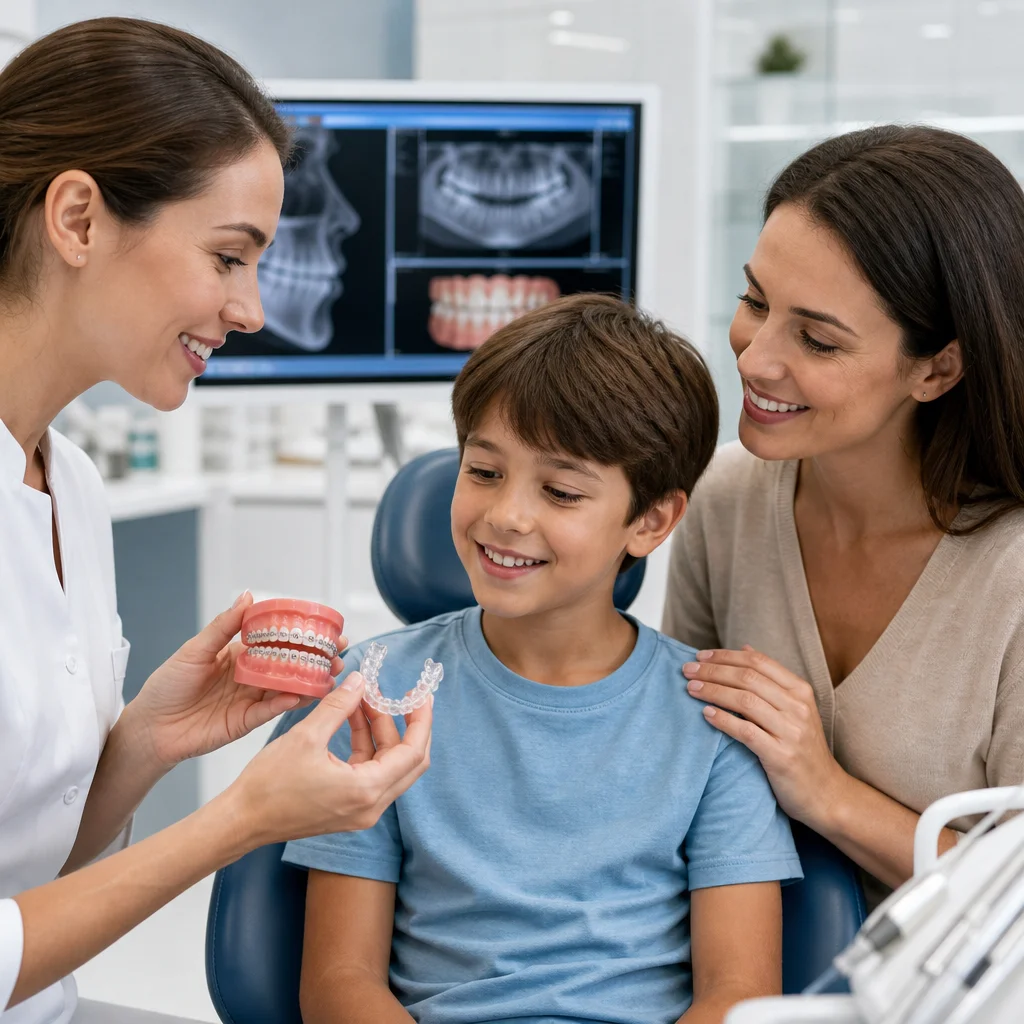
Modern families appreciate options, and clear aligners offer a less visible alternative to traditional braces for certain young patients. These custom-made, removable trays gently shift teeth into position over time. For motivated children, they’re a game-changer: no food restrictions, easier brushing and flossing, and virtually invisible treatment.
Clear aligners work best for kids who are responsible enough to wear them consistently (typically 20 to 22 hours daily) and keep them clean. Younger children in the 7 to 10 age range may do better with braces because they require more compliance and care than some kids are ready to handle. However, as children mature into their preteen and early teen years, aligners become an excellent option, especially for mild to moderate spacing or crowding issues.
We customize aligner treatment for each child, creating a series of trays that progress gradually over months. Because they’re removable, your child can eat normally, play sports without worry, and maintain excellent oral hygiene. Many of our young patients in Aventura and North Miami Beach choose aligners for their school photos and social events, then simply pop them back in.
Action step: If your child is 10 or older and has good self-care habits, ask about clear aligner candidacy during your visit.
Key Differences: Braces vs. Aligners for Young Patients
Choosing between braces and aligners depends on your child’s age, bite complexity, and maturity level. Here’s how they compare:
Interceptive braces work with jaw growth, address complex bite problems, require minimal child compliance (they’re fixed in place), and can correct larger skeletal discrepancies. They’re ideal for younger children and those with significant alignment issues.
Clear aligners offer discretion and comfort, require consistent wear and responsibility, work well for mild to moderate cases, and allow easier cleaning. They suit older, more responsible children.
Braces are often the first-line choice for phase one treatment because they don’t depend on a child’s motivation to wear them consistently. Aligners demand active participation and discipline. That said, a child who’s excited about their treatment and understands the responsibility may thrive with aligners.
The good news? Both approaches, when properly managed, deliver excellent results. Our role is to recommend the option that best matches your child’s dental needs, age, and personality. We’ll discuss both pathways with you during the assessment.
How We Assess Your Child’s Orthodontic Needs
We begin with a thorough clinical exam, reviewing your child’s bite, jaw alignment, and tooth eruption pattern. We ask about family history, habits like thumb-sucking, and any speech or breathing concerns. These details inform our assessment and help us catch problems early.
We take detailed dental records, including photographs and bite impressions, to document where your child stands now. This baseline becomes crucial for measuring progress and adjusting treatment as needed. Many parents appreciate having before-and-after photos to see the transformation over time.
Next, we move to advanced imaging to get a complete picture of your child’s developing dental and skeletal anatomy.
Our Advanced Digital Imaging Technology for Treatment Planning
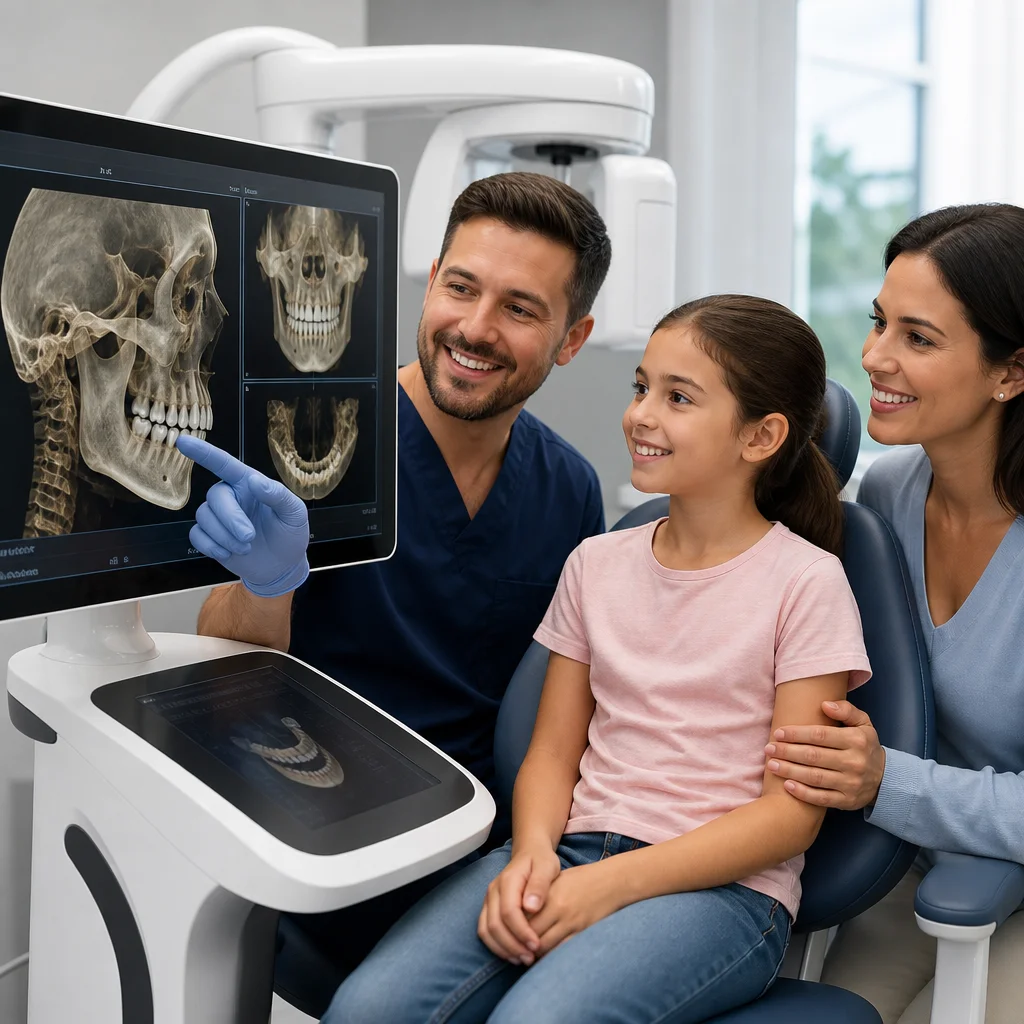
Our X-MIND PRIME 3D digital imaging system gives us unprecedented clarity into your child’s dental structure, jaw development, and bite mechanics. This three-dimensional view allows us to see problems invisible on standard X-rays and plan treatment with precision.
A 3D scan shows us the exact position of unerupted teeth, bone density, and jaw size relationships. We can predict how your child’s teeth will naturally erupt and identify potential crowding or bite issues before they become significant. This foresight lets us start interceptive treatment at the optimal moment, often preventing more severe problems.
We also use SOPROLIFE advanced decay detection technology to screen for cavities and monitor your child’s oral health throughout orthodontic treatment. Braces and aligners can make cleaning harder, so early detection protects teeth while we’re actively moving them.
Action step: Ask to see your child’s 3D scans during your consultation so you understand the treatment plan visually.
The Timeline: What to Expect During Phase One Treatment
Phase one interceptive treatment typically lasts 18 to 24 months, though some cases resolve in less time. The goal is to guide jaw growth, correct bite problems, and create space for permanent teeth without waiting years for natural eruption.
Your child will visit us every 4 to 6 weeks for adjustments and progress checks. Each appointment is brief, usually 20 to 30 minutes. We’ll adjust wires or swap aligner trays, answer questions, and ensure your child is comfortable. Most kids adapt quickly; the pressure they feel is gentle and goes away within a few days of each adjustment.
During phase one, your child’s permanent teeth will begin erupting. If all goes well, they’ll come in straighter and with better spacing, reducing or eliminating the need for phase two braces later. We’ll monitor their progress with regular photos and measurements, keeping you informed every step of the way.
Action step: Plan check-up visits around your family’s schedule; we work with you on timing that fits your life.
Comfort and Confidence: Why Our Patients Choose Us
We understand that orthodontics can feel intimidating for children and parents alike. Dr. Jean-Jacques Edderai and our team prioritize making treatment comfortable, predictable, and even enjoyable. We speak your language (English, Spanish, French, Italian, and Portuguese), so communication is never a barrier.
Our patients consistently tell us their children feel heard and respected during visits. We explain each step in age-appropriate language, show them the technology we’re using, and celebrate milestones together. This approach builds trust and reduces anxiety. Many kids actually look forward to their appointments once they see how friendly and professional our team is.
Beyond clinical excellence, we focus on the life-changing benefit of a healthy, confident smile. Children who see themselves transforming during treatment develop a positive relationship with dental care that lasts a lifetime. That’s the Smile Expert Design Center difference.
Flexible Financing to Make Early Treatment Accessible
We believe every family deserves access to excellent orthodontic care, regardless of budget. We offer flexible financing through CareCredit and Lending Club, allowing you to spread treatment costs into manageable monthly payments with little to no interest.
Our team also works with insurance plans and explains benefits clearly so you understand what’s covered. We’ll provide a detailed cost estimate upfront, with no surprises, and discuss payment options that work for your family’s situation.
Action step: Ask about financing options during your consultation; we have solutions that fit nearly every budget.
Your Next Step: Schedule Your Child’s Smile Consultation
If your child is between 7 and 10 years old, or if you’ve noticed crowding, spacing, or bite concerns at any age, now is the time to act. Early assessment costs nothing and gives you the information to make the best decision for your child’s smile.
Contact Smile Expert Design Center in North Miami Beach today. We’re here to answer your questions, show you both interceptive braces and clear aligner options, and create a personalized treatment plan that fits your child’s unique needs. Your child’s beautiful, healthy smile awaits.
Frequently Asked Questions (FAQ)
At what age does our practice recommend starting interceptive orthodontic treatment?
We typically recommend that children have their first orthodontic evaluation around age 7, when their permanent teeth begin to erupt. This timing allows us to identify developing issues early and potentially guide dental development to prevent more complex problems later. We use our X-MIND PRIME 3D digital imaging to assess your child’s specific situation and determine whether phase one treatment would benefit them now or if monitoring is the best approach.
How do we decide between recommending braces or clear aligners for our young patients?
We evaluate each child’s individual needs based on their bite pattern, jaw development, and specific orthodontic goals. Clear aligners work well for children with straightforward alignment issues who can maintain good compliance, while interceptive braces are often our recommendation when we need to guide jaw growth or address more complex bite problems. During your consultation, we’ll explain which option we believe gives your child the best outcome and discuss how each approach fits your family’s preferences and lifestyle.
What does our flexible financing make possible for families considering early orthodontic care?
We partner with CareCredit and Lending Club to ensure that cost never prevents your child from receiving the early treatment that could save them from more extensive work later. We can discuss payment plans that fit your family’s budget during your initial visit, and our team handles the financing details so you can focus on your child’s developing smile.