

Table of Contents
- 1. Understanding Complex Tooth Rotation and Why Standard Treatments Fall Short
- 2. Traditional Lingual Braces: Precision Behind-the-Scenes Correction
- 3. Clear Aligners: Limitations When Rotation Severity Increases
- 4. Hybrid Orthodontic Approaches: Combining Technologies for Maximum Results
- 5. Advanced 3D Digital Imaging: How We Plan Your Rotation Correction
- 6. Why Our Clear Aligner Protocol Outperforms Standard Systems
- 7. Treatment Timeline Comparison: What You Can Realistically Expect
- Frequently Asked Questions (FAQ)
1. Understanding Complex Tooth Rotation and Why Standard Treatments Fall Short
Complex tooth rotation presents one of the trickiest challenges in modern orthodontics. When a tooth twists significantly on its axis, standard solutions often underdeliver, leaving patients frustrated after months of treatment with minimal progress. At Smile Expert Design Center, we’ve spent years refining advanced approaches that actually move rotated teeth efficiently and predictably. This guide walks you through each major treatment option so you can understand which approach is best suited to your unique situation.
Tooth rotation occurs when a tooth turns around its long axis, sometimes by 45, 90, or even more degrees. Unlike simple vertical or horizontal misalignment, rotation creates a three-dimensional problem that demands three-dimensional correction.
Many patients discover that basic fixed braces or standard clear aligners struggle with severe rotation. Here’s why: teeth resist rotational movement more than any other type of movement. The periodontal ligament (the tissue anchoring your tooth to bone) works hardest when a tooth must spin in place. Standard appliances weren’t engineered to generate the precise, sustained force needed for complex rotation. This leads to treatment delays, abandoned cases, or incomplete correction that compromises both function and aesthetics.
The consequence? A smile that looks partially corrected, uneven tooth contacts, and bite problems that persist even after braces come off. We’ve seen patients who spent years in treatment only to have their rotated teeth gradually drift back after removal.
The good news is that modern solutions exist specifically to tackle this challenge. Understanding your options helps you avoid wasted time and invest in a treatment that actually works.
2. Traditional Lingual Braces: Precision Behind-the-Scenes Correction
Lingual braces are fixed to the back (tongue-side) of your teeth, making them invisible from the front. Because they’re bonded directly to each tooth at precise angles, they excel at generating the concentrated rotational forces that stubborn teeth demand.
How they work: Lingual braces use customized brackets positioned at exact angulations for each tooth. The wire threading through these brackets can apply differential pressure that compels rotation more effectively than many other systems. For severe, multi-tooth rotation, this precision is genuinely valuable.
The practical reality: Lingual braces require significant adjustments to speech initially (most patients adapt within 2-4 weeks). They demand excellent oral hygiene habits because they sit behind your teeth, making flossing more complex. Treatment typically ranges 24-36 months for complex cases, and the monthly adjustment appointments are essential to maintain correction force.
Cost consideration: Lingual braces are among the pricier orthodontic options, often ranging $8,000-$10,000+ depending on complexity. We offer flexible financing through CareCredit and Lending Club to make this investment manageable.
Your takeaway: Lingual braces deliver powerful rotational control, especially when other methods have failed. They’re ideal if you need maximum discretion and are willing to invest in careful home care and consistent appointments.
3. Clear Aligners: Limitations When Rotation Severity Increases
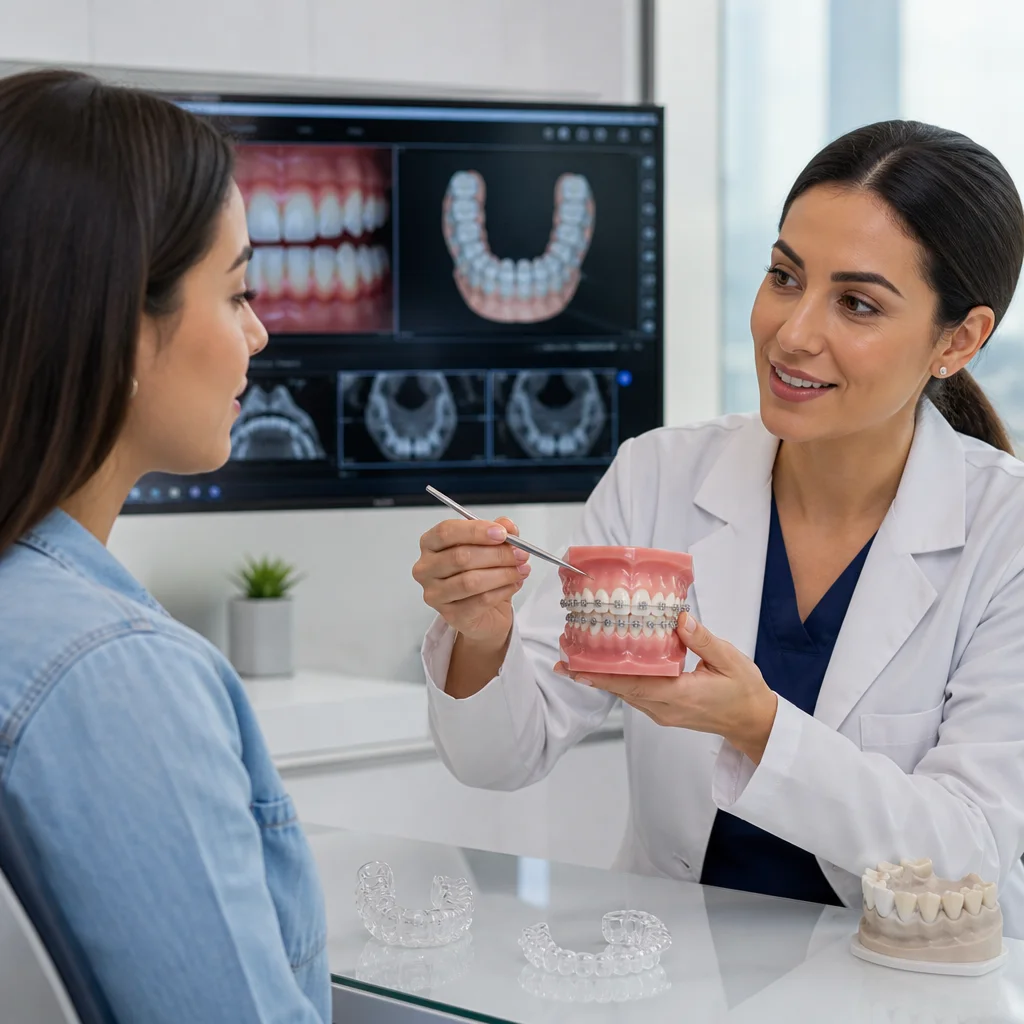
Clear aligners like Invisalign represent a major convenience breakthrough for mild-to-moderate misalignment. They’re removable, nearly invisible, and require no dietary restrictions. Many patients prefer them simply because of lifestyle ease.
Where they struggle: As rotation severity increases, standard aligner systems hit a ceiling. Here’s the mechanical problem: aligners create force through incremental pressure on tooth crowns (the visible portion). Rotating a tooth efficiently requires force applied far from the tooth’s center of rotation, and aligners are built to move teeth by pushing near their tops. For slight rotations (15-25 degrees), modern aligners manage reasonably well. Beyond 40-50 degrees of rotation, you encounter diminishing returns. Treatment stretches into years, some rotations never fully correct, and relapse (movement back toward the original position) becomes likely after treatment ends.
The common patient story: “My aligners moved my front teeth inward, but that rotated tooth still looks twisted.” This frustration happens because the system wasn’t designed to prioritize that specific three-dimensional problem.
Your takeaway: Clear aligners excel for mild rotation and overall convenience, but they require honest assessment. If your rotation is severe, a system designed specifically for rotational correction will deliver faster, more predictable results with less risk of incomplete correction.
4. Hybrid Orthodontic Approaches: Combining Technologies for Maximum Results
A hybrid approach integrates fixed appliances (braces) for rotational control with clear aligners used during finishing phases. This strategy captures the best of both worlds: raw rotational power when it’s most needed, plus discretion during the refinement stage.
How we structure it: We typically begin with fixed appliances (which could be traditional braces, lingual braces, or advanced self-ligating brackets) focused solely on correcting rotation. Once the tooth has rotated into proper alignment, we transition to clear aligners to refine bite contact, adjust spacing, and perfect the final result. This usually cuts overall treatment time and increases patient satisfaction because most of the later months involve the less visible aligner phase.
Real-world scenario: A patient with 60-degree rotation of a central incisor might spend 6-8 months in fixed braces achieving primary rotation correction, then 4-6 months in aligners perfecting the bite. Total time is often 30% shorter than fixed braces alone, and the patient spends the final visible months in discrete aligners.
We’ve found this hybrid protocol maximizes both efficiency and patient comfort. The flexibility to combine technologies means we’re never locked into one system that isn’t delivering fast enough.
Your takeaway: Hybrid treatment plans offer the most realistic timeline and highest success rate for complex rotation. They’re the approach we most often recommend because they balance clinical outcomes with patient lifestyle needs.
5. Advanced 3D Digital Imaging: How We Plan Your Rotation Correction
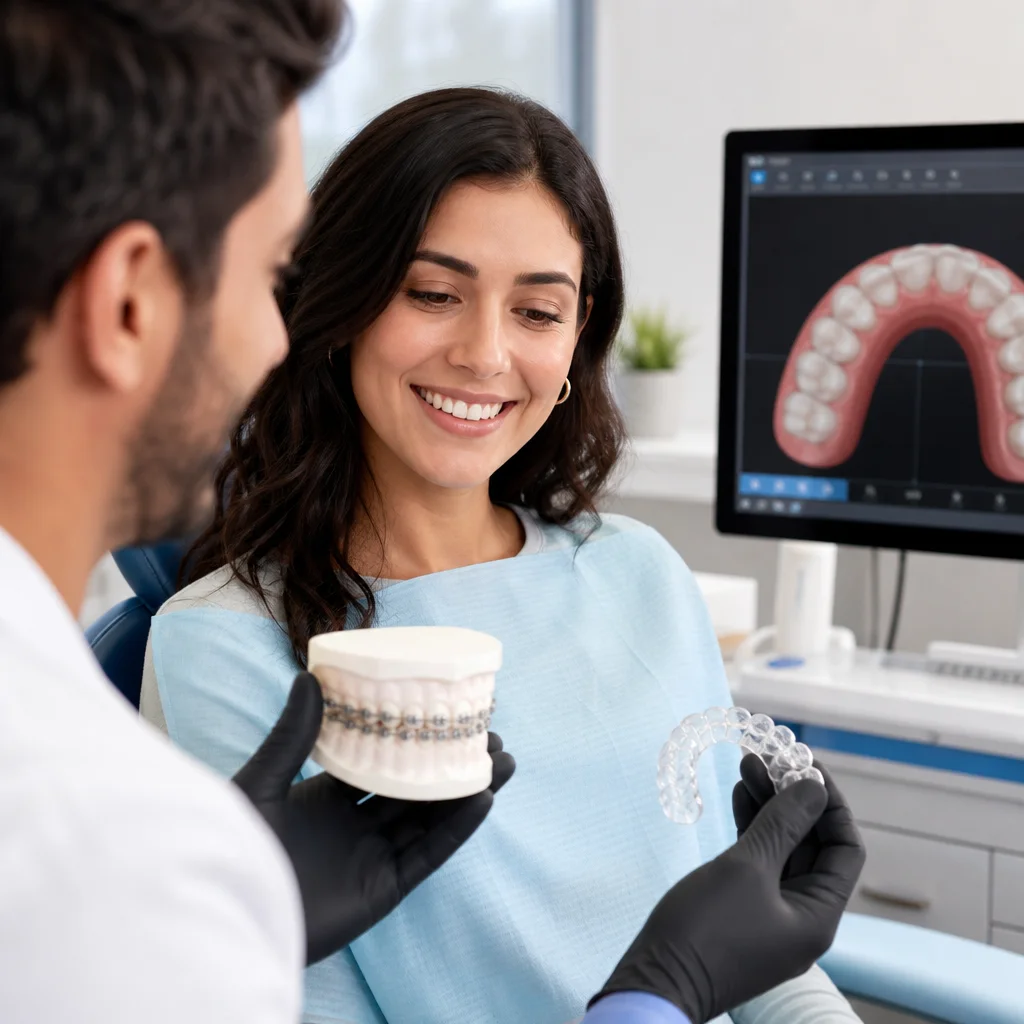
Successful rotation correction begins long before any appliance touches your teeth. Our X-MIND PRIME 3D digital imaging system captures your entire dental anatomy in precise three-dimensional detail, allowing us to visualize each tooth’s current angle, the exact rotation needed, and the biomechanical pathway to achieve it.
This technology transforms planning from educated guessing into mathematical precision. We can rotate a virtual model of your tooth, measure forces at different angles, and predict how your specific tooth will respond to treatment. This pre-planning eliminates surprises and reduces the likelihood of incomplete correction or damage to tooth roots (which can happen if force is applied carelessly).
The clinical advantage: We literally see your treatment outcome before it begins. If we identify that a particular tooth requires more rotational force than standard aligners can deliver, we know to recommend fixed braces or hybrid approach upfront rather than after six months of failed attempts.
Our commitment: Using advanced imaging, we design treatment specifically for your anatomy, not a one-size-fits-all protocol. This personalized approach is what separates predictable outcomes from frustrating plateaus.
Your takeaway: Demand digital 3D imaging and a detailed treatment plan before starting any orthodontic work. This investment upfront protects your time and money and sets you up for success.
6. Why Our Clear Aligner Protocol Outperforms Standard Systems
We’ve invested heavily in optimizing clear aligner therapy specifically for rotational challenges. Our protocol differs from standard systems in several critical ways.
First, we use custom force vectors and extended contact points. Rather than relying on off-the-shelf aligner geometry, we design each aligner with rotational force distribution tailored to your tooth’s resistance profile. This means teeth that typically stall in standard aligners actually move predictably in our system.
Second, we integrate smart sequencing. Many practices ask aligners to solve too many problems simultaneously. We sequence rotation correction first, then spacing, then bite refinement. This prioritization means rotational force isn’t diluted competing with other movements.
Third, we combine our clear aligner protocol with strategic fixed appliance “booster” phases. If an aligner series stalls on a stubborn rotation, we don’t just add more aligners. We add a brief 4-6 week fixed appliance phase to unlock that tooth, then return to aligners. This hybrid-when-needed approach is dramatically more effective than pushing a failing aligner system endlessly.
The outcome: Patients see rotation correction 20-30% faster with our protocol compared to standard clear aligner therapy for complex cases. More importantly, the correction is stable, not prone to relapse.
Your takeaway: Not all clear aligner systems are equivalent. Systems optimized specifically for rotational correction deliver superior results, faster timelines, and better stability than generic approaches.
7. Treatment Timeline Comparison: What You Can Realistically Expect
Transparency about timeline matters. Let’s break down realistic expectations for different approaches.
Standard fixed braces for complex rotation: 28-36 months. Fixed braces are reliable, but they’re not fast. Rotation correction is inherently slow because sustained, gentle force works better than aggressive force. Your wire will be adjusted monthly, and your orthodontist will typically wait 6-8 weeks between significant rotational adjustments to let the tooth settle.
Standard clear aligners for complex rotation: 18-30 months if the rotation is moderate, but potentially 36+ months or incomplete if severe. Many practices don’t publicly acknowledge this, but severe rotation simply exceeds the typical aligner system’s capability.
Lingual braces for complex rotation: 24-32 months. Because they’re customized to your tooth angles, they often match or slightly outperform conventional braces for rotation, but the timeline remains substantial.
Our hybrid protocol (fixed braces plus aligners): 16-24 months for complex rotation. By using fixed appliances strategically during the rotational correction phase, then transitioning to aligners for finishing, we compress overall treatment. Patients appreciate the faster timeline and the months spent in discrete aligners during the final phase.
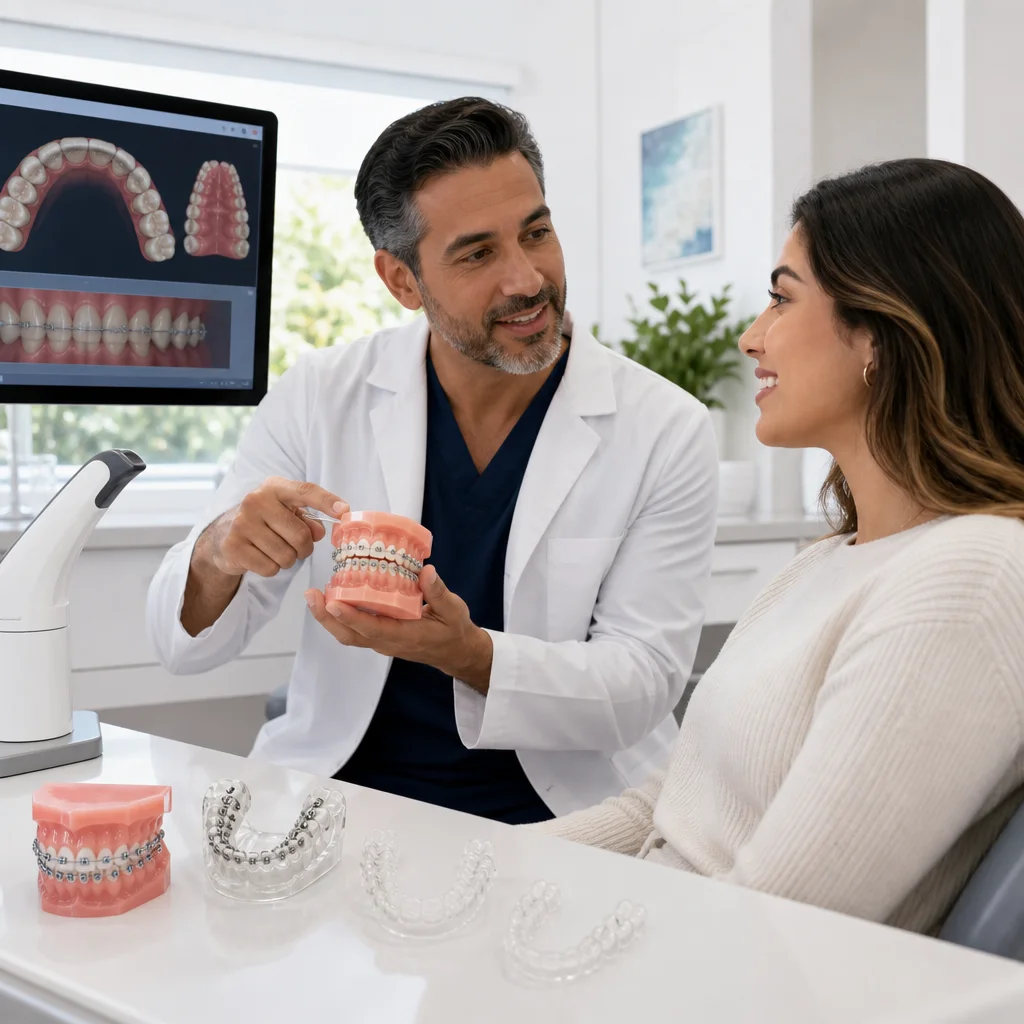
Our optimized clear aligner protocol alone: 14-22 months for moderate rotation, 18-26 months for severe rotation. This works only if your case qualifies for aligner-only treatment and if we’ve designed the force vectors correctly upfront.
The critical insight: Timeline depends less on the technology and more on honest assessment of your rotation severity and the system’s capability. We never promise a timeline we can’t deliver. Our initial consultation uses 3D imaging to determine which approach will actually work best for your situation, then we give you a realistic forecast.
If another practice promises to correct severe rotation in 12 months with aligners alone, be skeptical. If they suggest invisible lingual braces will have you finished in 16 months, ask about their specific experience with complex rotation. We’ve built our treatment plans on years of clinical data, and realistic timelines build trust.
Your takeaway: Demand a detailed, specific timeline based on your imaging and case assessment, not a generic estimate. The practice that can explain why a timeline makes sense is the one you should trust.
—
At Smile Expert Design Center, we recognize that complex tooth rotation isn’t a one-size-fits-all problem. Dr. Jean-Jacques Edderai and our team have spent years perfecting hybrid and optimized protocols specifically because we saw patients disappointed by standard approaches. Our combination of advanced Precision Digital Smile Design, 3D imaging, and tailored treatment sequencing delivers outcomes that are faster, more predictable, and more stable than traditional methods.
If you’re dealing with rotated teeth that haven’t responded to previous treatment, or if you’re exploring options for the first time, we invite you to schedule a comprehensive consultation. We’ll image your teeth in 3D, analyze the exact nature of your rotation, and present a specific, realistic treatment plan. We serve North Miami Beach, Miami, and Miami Beach with flexible financing options including CareCredit and Lending Club, so cost doesn’t need to be a barrier to the smile transformation you deserve.
Your rotated teeth didn’t develop overnight, and correcting them efficiently requires precision planning and the right technology. Let us show you why our approach delivers the results other practices miss.
Frequently Asked Questions (FAQ)
How do we determine whether clear aligners or lingual braces are right for my complex tooth rotation?
We use our X-MIND PRIME 3D digital imaging system to create a detailed map of your tooth position, rotation angle, and bite relationship before recommending a treatment path. If your rotation is mild to moderate, our advanced clear aligner protocol often delivers excellent results with the convenience you’re looking for. For severe rotations, we may recommend lingual braces or a hybrid approach that combines both technologies, which we discuss openly during your consultation so you can make an informed choice.
What happens if standard clear aligners don’t work for my rotated teeth?
We don’t force a one-size-fits-all solution. If standard aligners reach their limits with your specific rotation pattern, we transition you to fixed lingual braces, a hybrid treatment combining aligners with periodic bracing, or custom orthodontic adjustments based on your 3D imaging data. Our goal is getting your teeth straight and your smile confident, regardless of which tool works best for your case.
How long does correction typically take for complex tooth rotation?
Treatment timeline depends on rotation severity and which approach we use. Mild rotations with clear aligners may resolve in 8-14 months, while severe cases requiring lingual braces or hybrid methods typically take 18-28 months. During your first visit, we’ll show you a realistic timeline based on your specific imaging and explain what factors might extend or shorten that estimate.