

Table of Contents
- Why Cosmetic Patients Need Advanced Decay Detection
- The Hidden Problem: Decay Behind Your Beautiful Smile
- How SOPROLIFE Technology Changes Everything
- Detecting Decay Before It Damages Your Investment
- Our Comprehensive Approach to Smile Protection
- Combining Detection with Cosmetic Excellence
- Real Results: Preserving Beauty and Health
- Your Next Steps to a Protected Smile
- Frequently Asked Questions (FAQ)
Why Cosmetic Patients Need Advanced Decay Detection
When you invest in cosmetic dentistry, you’re investing in confidence. A beautiful new smile transforms how you feel about yourself every single day. But that investment is only as strong as the foundation beneath it. Decay that goes undetected can compromise everything you’ve worked to achieve, turning an aesthetic transformation into a costly repair project.
Here’s the reality: cosmetic patients often face a unique challenge. You’ve invested in porcelain crowns, veneers, or other restorations that look perfect on the surface. But underneath and around those beautiful restorations, decay can develop silently. Traditional cavity detection methods may miss these problems until they’ve already damaged the tooth structure supporting your smile.
We’ve seen too many patients come in months or years after their cosmetic work, only to discover that decay has compromised a tooth they thought was protected. Early detection changes this equation entirely. When we catch decay in its earliest stages, we preserve both your smile’s beauty and the underlying health. This is why we’re committed to using the most advanced detection technology available.
Action step: Schedule an advanced screening if you had cosmetic work more than a year ago and haven’t had a full diagnostic imaging session recently.
The Hidden Problem: Decay Behind Your Beautiful Smile
Cosmetic restorations sit on top of your natural tooth, sealing it from view. This creates a visibility blind spot. Decay can begin at the margins where the restoration meets your natural tooth, or it can work its way down the root surface. By the time you feel pain or notice discoloration, the decay has often progressed significantly.
Traditional X-rays are helpful, but they have real limitations. They use two-dimensional images of a three-dimensional problem. Decay can hide in areas that don’t show up clearly on standard radiographs, especially around crowns or in the spaces between teeth where cosmetic patients are most vulnerable.
Another factor: cosmetic patients sometimes assume their restorations are permanent and require less care. In reality, they require vigilant maintenance. The tooth underneath a crown is still alive and still susceptible to decay if the seal around the restoration breaks down or if plaque builds up at the margins.
We’ve treated patients who experienced significant damage because decay went undetected for 18 to 24 months. In one case, a patient who had received beautiful cosmetic crowns developed decay that reached the pulp, requiring a root canal they otherwise could have avoided. Early detection would have caught it when a simple filling would have solved the problem.
How SOPROLIFE Technology Changes Everything
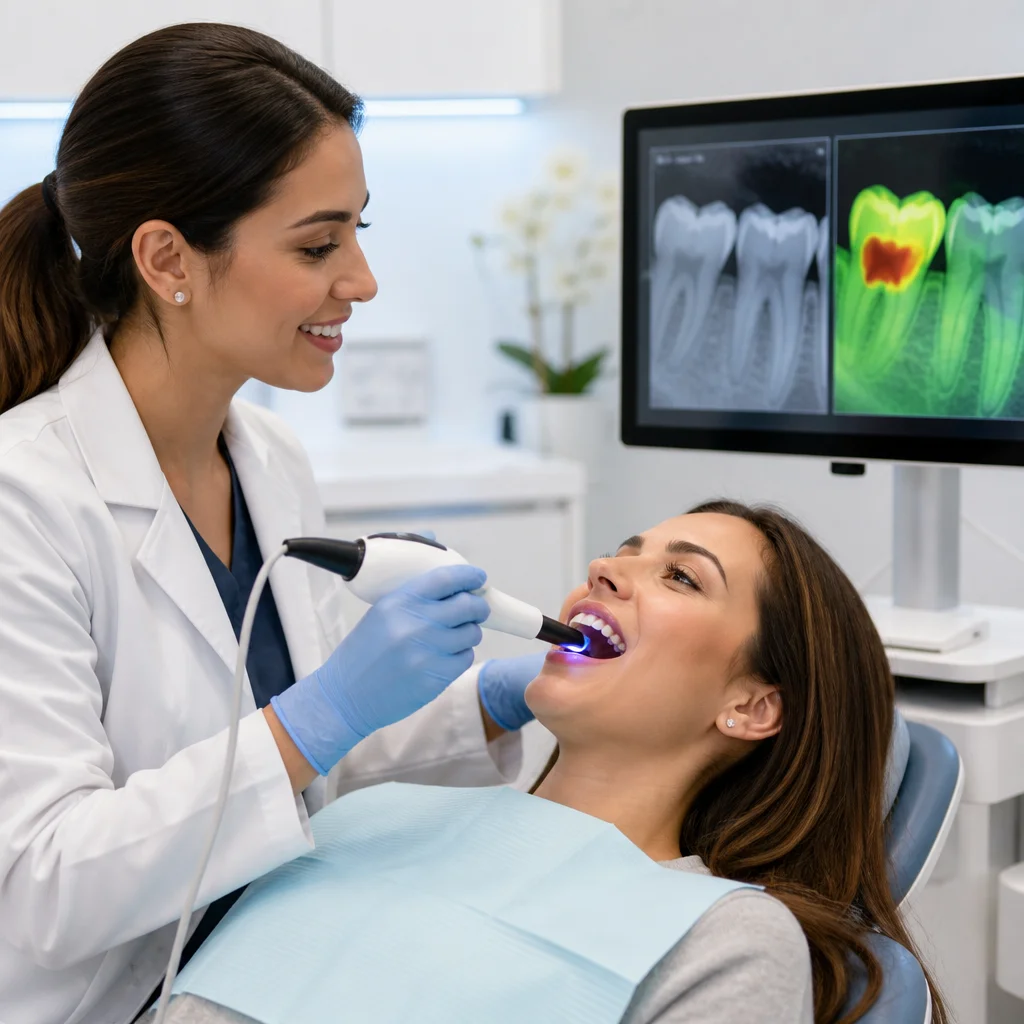
SOPROLIFE is a fluorescence-based decay detection system that works on a fundamental principle: healthy tooth structure and decayed tooth structure have different optical properties. When exposed to specific wavelengths of light, decayed areas fluoresce differently than healthy enamel and dentin.
We use SOPROLIFE because it detects demineralization up to five times earlier than traditional X-rays alone. This means we’re identifying decay in its pre-cavity stage, when intervention is simplest and least invasive. The technology is particularly valuable for cosmetic patients because it reveals problems hiding under or around restorations.
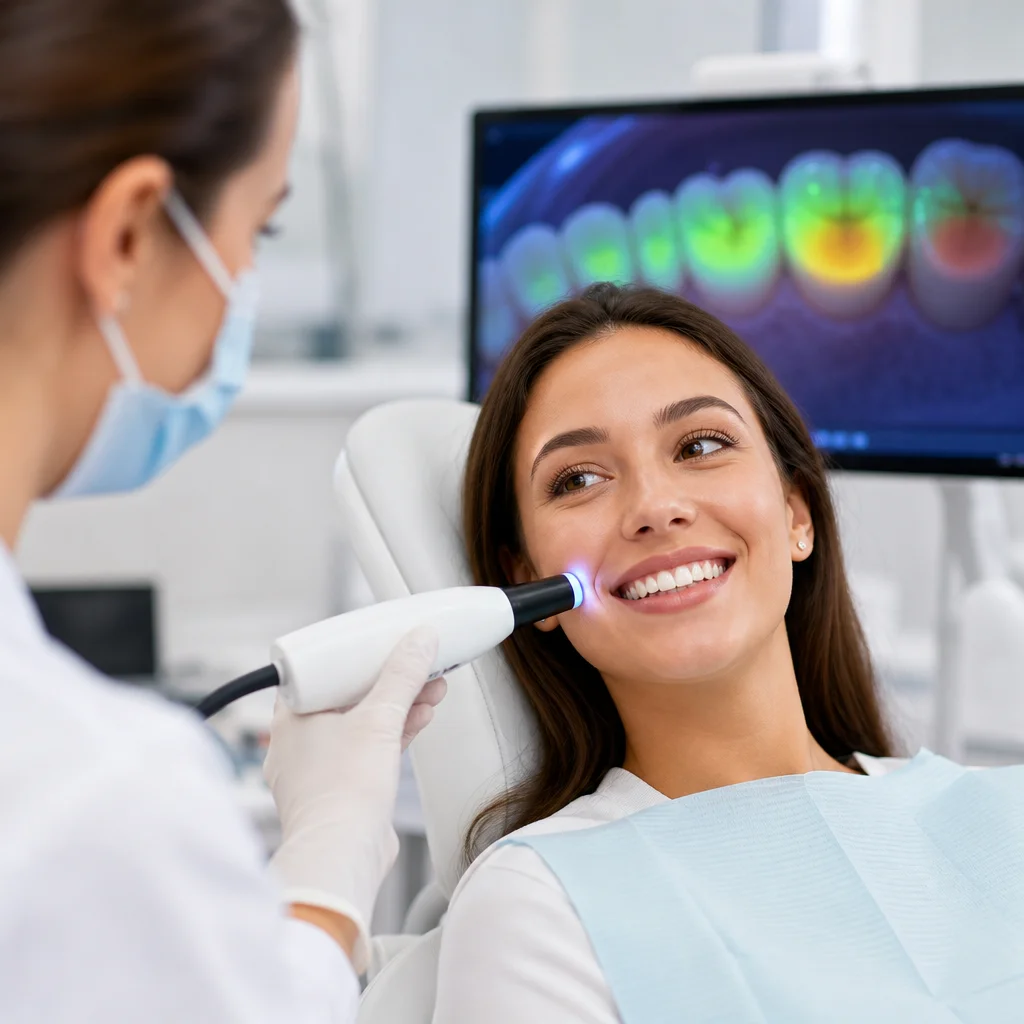
How it works in practice: we use a small handheld device that emits safe LED light across each tooth. The decay detection software processes the fluorescence data in real time, displaying results on our screen. Areas of concern light up clearly, giving us a precise map of where decay is developing. There’s no radiation, no discomfort, and no additional appointment needed. We integrate it into your regular examination.
The accuracy matters enormously. We’re not guessing about whether a shadow on an X-ray is decay or just the angle of the image. SOPROLIFE gives us definitive information, which means we recommend treatment only when it’s genuinely needed. This builds trust and ensures you’re never over-treated.
Action step: Ask us about a SOPROLIFE scan at your next appointment, especially if you have multiple cosmetic restorations.
Detecting Decay Before It Damages Your Investment
Early detection means intervention options. When we catch decay at the demineralization stage, before it becomes a cavity, we have several approaches that preserve your tooth structure:
- Fluoride therapy: Remineralizing treatments that strengthen weakened areas and stop decay progression without drilling.
- Targeted sealants: Applying protective barriers to vulnerable spots identified by SOPROLIFE.
- Enhanced home care protocols: Custom guidance on cleaning around your specific restorations, including techniques and products that target your unique risk areas.
- Dietary adjustment: Identifying habits or foods contributing to decay risk and creating realistic modifications.
Once decay becomes a cavity, we need to remove it and restore the tooth. But if we catch it early, we’re often placing a filling rather than replacing a crown or pursuing root canal therapy. This preserves tooth structure, costs less, and maintains the integrity of your cosmetic work.
We’ve used SOPROLIFE to detect decay in patients who had no symptoms whatsoever. A 48-year-old patient with beautiful cosmetic crowns on her upper front teeth came in for a routine cleaning. SOPROLIFE revealed early decay along the gumline of one crown, invisible to the naked eye and not visible on previous X-rays. We treated it with a simple restoration, preventing what would have eventually required a crown replacement.
This patient later told us she was grateful we caught it. She realized that without this technology, she would have lost a significant amount of tooth structure before decay became apparent.
Our Comprehensive Approach to Smile Protection
At Smile Expert Design Center, we combine advanced detection with a preventive mindset that extends beyond technology. Protecting your cosmetic smile investment means addressing multiple factors:
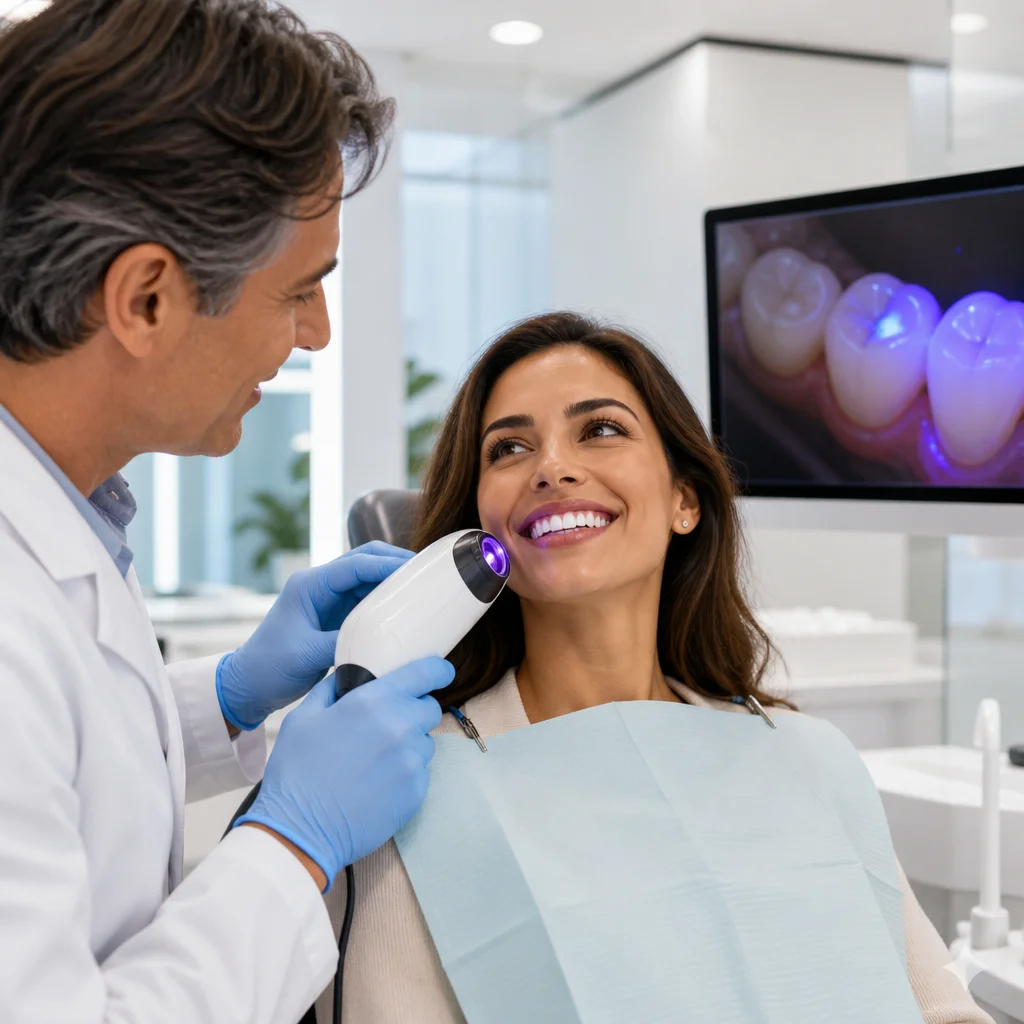
Diagnostic precision is our foundation. Beyond SOPROLIFE, we use X-MIND PRIME 3D digital imaging to give us complete visibility of tooth structure, bone density, and any problems developing below the gumline. This three-dimensional view catches problems that two-dimensional imaging simply cannot reveal.
Maintenance protocols are customized to cosmetic patients. If you have crowns or veneers, we create a specific care plan addressing the margins and areas most vulnerable to decay. This includes professional cleanings scheduled at intervals appropriate for your individual risk level, not just the standard six-month protocol everyone receives.
Material selection matters too. When we place cosmetic restorations, we choose materials and techniques that minimize the risk of decay developing underneath. This includes how we prep the tooth, what materials we select, and how we cement the final restoration. Every decision is made with long-term durability in mind.
Patient education is ongoing. We don’t just tell you to brush and floss. We show you the specific areas around your restorations where decay is most likely to start. We demonstrate the techniques and tools that actually work for your mouth’s unique anatomy.
We see this comprehensive approach as part of our commitment to you. Your cosmetic smile should feel beautiful and be beautiful, with the foundation of genuine oral health beneath it.
Combining Detection with Cosmetic Excellence
Early decay detection isn’t separate from cosmetic dentistry. It’s integral to it. A truly excellent cosmetic result is one that lasts, one that remains healthy for years and decades, not one that looks perfect for six months before underlying problems emerge.
When we discuss cosmetic dentistry options with you, we’re already thinking about long-term protection. If you’re considering a smile makeover, part of our planning includes understanding your decay risk and building that into our treatment strategy. We might recommend professional cleanings at different intervals, or use materials with specific properties that resist decay better, or place restorations in ways that make future decay less likely.
Digital Smile Design previews show you what your smile will look like. But we’re also showing you what we’ve planned to keep it healthy. This might mean discussing the margins around a crown, the thickness of a veneer, or the materials we’ve selected based on your specific risk factors.
One patient came to us wanting veneers on her six upper front teeth. During our comprehensive examination using SOPROLIFE, we identified early decay on two of those teeth. We treated the decay first, then designed her veneers with this history in mind, selecting materials and placement that minimized future risk. Her smile is stunning and incredibly durable because we addressed the health foundation first.
Real Results: Preserving Beauty and Health
We regularly see outcomes that validate this approach. Patients who’ve had cosmetic work five, ten, even fifteen years ago, with no new decay, no compromised restorations, and no aesthetic regrets. These aren’t lucky outcomes. They’re results of consistent detection, preventive care, and material choices made with longevity in mind.
One North Miami Beach family we’ve worked with demonstrates this perfectly. The mother came in for a cosmetic smile makeover seven years ago. We placed four crowns and five veneers, using SOPROLIFE and 3D imaging as part of our standard protocol. She’s had regular maintenance appointments, and SOPROLIFE scans have caught early demineralization twice. Both times, we addressed it with remineralization therapy before it became a cavity. Her smile looks as beautiful today as it did when we completed her treatment, and her underlying teeth are as healthy as when we started.
Her teenage daughter later came in for orthodontic care, and her 12-year-old son is in our pediatric program. By using advanced detection from the beginning, we’re preventing problems for the whole family rather than treating crises as they emerge.
Your Next Steps to a Protected Smile
If you’ve had cosmetic dental work and want to ensure it lasts beautifully and healthily, we’re here to help. Here’s what we recommend:
- Schedule a comprehensive diagnostic appointment that includes SOPROLIFE decay detection and X-MIND PRIME 3D imaging. This gives us a complete picture of what’s happening beneath your restorations.
- Discuss your individual risk profile with Dr. Jean-Jacques Edderai or our clinical team. Understand whether your maintenance should follow standard intervals or be customized based on your specific factors.
- Establish a preventive care protocol tailored to protecting your smile investment. This might include professional cleanings at specific intervals, targeted home care techniques, or dietary adjustments.
- Ask about your restorations’ long-term plan. How long do they typically last? What signs should you watch for? When might replacement become necessary?
We’re available 24/7 for emergencies, and we’re equally committed to preventive care that keeps emergencies from happening in the first place. Your beautiful smile deserves both exceptional aesthetics and underlying health that sustains it for years to come. We serve North Miami Beach, Miami Beach, Miami, and Aventura, and we’d be honored to be your partner in protecting what you’ve invested in.
Contact us today to schedule your advanced decay detection appointment and discover how we can preserve your smile’s beauty and health together.
Frequently Asked Questions (FAQ)
How does SOPROLIFE technology help protect cosmetic dental work we’ve done for you?
We use SOPROLIFE to detect decay at its earliest stages, often before it becomes visible on traditional X-rays. This allows us to catch problems beneath crowns, veneers, and other cosmetic restorations before they compromise the smile we’ve created for you, ultimately saving you from needing costly repairs or replacements down the road.
Can we detect decay between my teeth or under existing cosmetic work?
Yes, that’s one of our key advantages with SOPROLIFE. We can identify decay in areas that are typically difficult to spot, including interproximal spaces and underneath your existing cosmetic restorations. Early detection in these hidden areas means we can address issues while they’re still small and manageable, protecting both your investment and your natural tooth structure.
What happens if we find decay during your preventive exam?
We’ll discuss our treatment options with you right away, which might range from a simple filling to more involved restoration depending on the decay’s location and severity. Our goal is always to preserve as much of your natural tooth as possible while maintaining the aesthetic appearance of your smile.