

Table of Contents
- 1. Understanding Implant Overdentures and Fixed Bridges
- 2. Longevity and Durability Comparison
- 3. Bone Health Preservation and Jaw Support
- 4. Aesthetic Results and Natural Appearance
- 5. Maintenance and Cleaning Ease
- 6. Cost-Effectiveness Over Time
- 7. Comfort and Lifestyle Flexibility
- Frequently Asked Questions (FAQ)
1. Understanding Implant Overdentures and Fixed Bridges
When you’re facing the reality of missing teeth or extensive tooth loss, the choices ahead can feel overwhelming. Fixed bridges and implant overdentures are both legitimate options, but they work in fundamentally different ways. At Smile Expert Design Center, we’ve guided hundreds of patients through this decision, and we want to help you understand why implant overdentures often emerge as the superior choice for long-term oral health, comfort, and confidence.
The right tooth replacement solution isn’t just about filling gaps. It’s about preserving your jawbone, maintaining your facial structure, enjoying your favorite foods without worry, and waking up each day with genuine confidence in your smile.
A fixed bridge is a traditional restoration that spans the gap left by missing teeth. It relies on anchoring crowns to your natural teeth on either side of the gap, creating a permanent structure that’s cemented in place. While bridges have been used successfully for decades, they work by borrowing support from adjacent teeth, which can place additional stress on those healthy teeth over time.
Implant overdentures work differently. These are custom-made prosthetic teeth supported by dental implants that we surgically place into your jawbone. Think of implants as artificial tooth roots that fuse with your bone, providing a stable foundation. The overdenture sits on top of these implants, and depending on your case, it may be removable for cleaning or fixed permanently in place. This foundation transforms how your restoration functions and performs over time.
The key distinction: bridges depend on adjacent natural teeth for support, while implant overdentures create their own independent support system. This fundamental difference affects everything from how long your restoration lasts to how well your jawbone stays intact.
Your takeaway: Request a consultation where we can evaluate your bone density and tooth structure to determine whether bridges or implant overdentures align with your long-term goals.
2. Longevity and Durability Comparison
Fixed bridges typically last 10-15 years before needing replacement. That’s not a short timeframe, but consider what happens beneath the surface. The teeth supporting the bridge gradually experience more stress, and the anchor teeth can eventually weaken. When a bridge fails, replacing it often means preparing new teeth for anchors, sometimes using teeth that are already compromised.
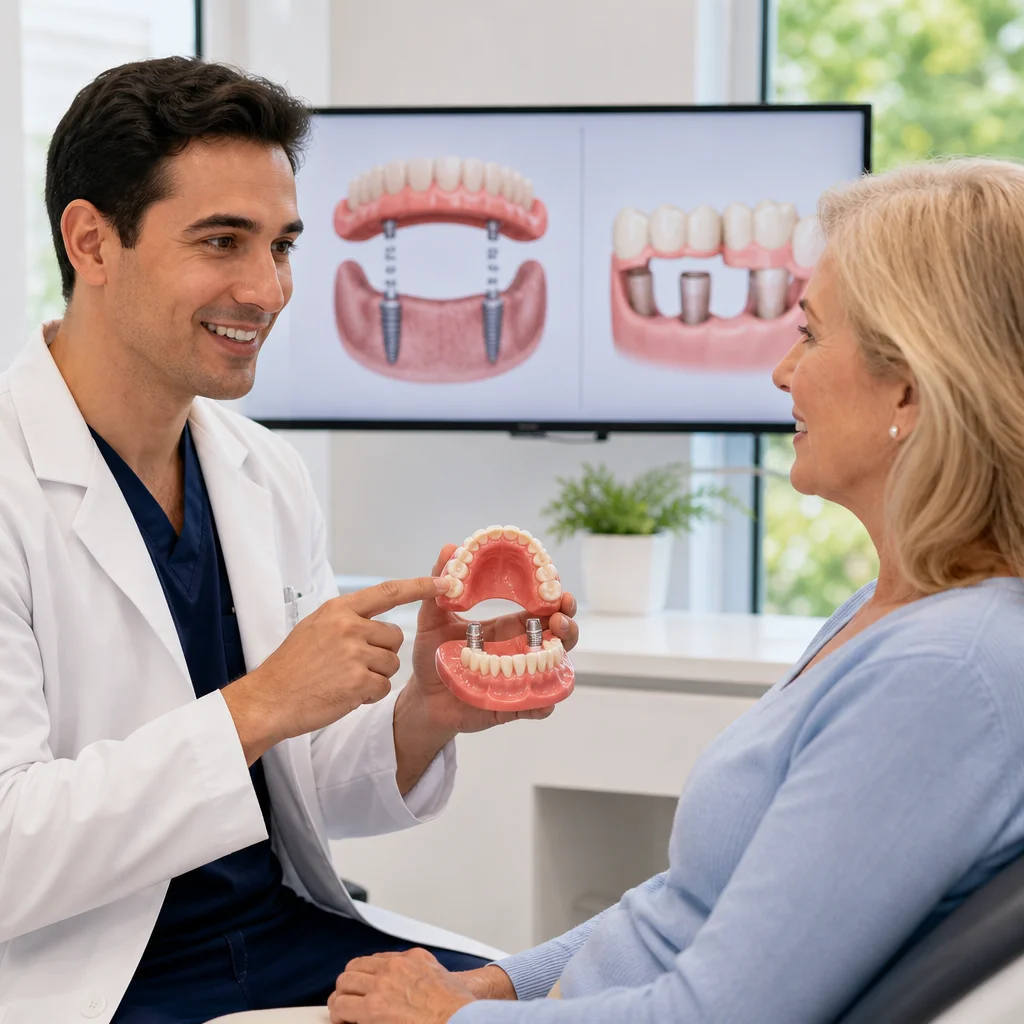
Implant overdentures regularly exceed 20-25 years of functional life, and many last 30+ years with proper care. The implants themselves, when maintained well, can last a lifetime. What actually may need replacement eventually is the overdenture portion, not the implant foundation. This means you’re investing in a system that grows stronger and more stable over time as the implant fully integrates with your bone.
We’ve had patients at our North Miami Beach practice enjoy the same implant overdenture for over two decades with routine maintenance and occasional adjustments. Because implants don’t rely on neighboring teeth for stability, they don’t weaken over time. They become part of your jaw structure, providing consistent support year after year.
Your takeaway: Consider the total cost of ownership. Multiple bridge replacements over a lifetime often exceed the investment in implant overdentures that may never need full replacement.
3. Bone Health Preservation and Jaw Support
This is where the science becomes crucial. When you lose teeth, the underlying jawbone begins to resorb, or shrink, because it no longer receives stimulation from tooth roots. Fixed bridges don’t address this problem. The bone beneath the bridge continues to deteriorate, sometimes quite rapidly, which can change your facial appearance and make future restorations more difficult.
Dental implants function like natural tooth roots by transferring chewing forces directly into the jawbone. This stimulation tells your body to maintain bone density and even rebuild bone in some cases. Patients who choose implant overdentures typically preserve 95% of their jawbone structure over 10 years, whereas those with bridges experience significant resorption that can alter their facial contours.
Beyond appearance, a healthy jawbone supports clear speech, confident chewing, and stable facial height. When bone loss becomes severe, it can affect how dentures fit and how naturally your smile looks. Implant overdentures essentially halt this decline and often reverse it partially, which is why patients report feeling like their face looks younger after choosing this solution.
At our practice, we use X-MIND PRIME 3D digital imaging to assess your bone structure and predict how different treatment options will affect your jaw over time. This precise visualization helps you see exactly why implant overdentures protect what matters most: your natural bone.
Your takeaway: If bone preservation matters to you (and it should for your long-term quality of life), implant overdentures are the clear choice.
4. Aesthetic Results and Natural Appearance
When fixed bridges are crafted skillfully, they can look beautiful. However, they have a cosmetic vulnerability: as supporting teeth settle and bone resorbs, gaps can appear between the bridge and your gums. Dark lines or shadows may become visible over time, and the false teeth can start looking flat or out of harmony with your face’s natural contours.
Implant overdentures offer superior aesthetics because we can customize the prosthetic teeth, gum contours, and overall appearance to match your facial proportions perfectly. The teeth sit in a naturally sculpted gum line that we design specifically for your smile. Because the restoration isn’t anchored to existing teeth, we have complete control over its positioning, size, and shading.
More importantly, the restoration can be adjusted or remade if your aesthetic preferences change or if the initial design needs refinement. Many patients come to us after years with a bridge because they’re dissatisfied with how it looks. With implant overdentures, achieving that dramatically improved smile you’ve always wanted becomes genuinely possible, and we can refine it to perfection using our advanced cosmetic smile design techniques.
Your takeaway: Schedule a cosmetic consultation where Dr. Jean-Jacques Edderai can show you digital smile previews of what your implant overdenture could look like before any treatment begins.
5. Maintenance and Cleaning Ease
Cleaning around a fixed bridge requires special tools and careful technique. You need floss threaders or water flossers to access the underside of the bridge, and many patients find this routine tedious or difficult, which leads to inadequate cleaning and eventual problems like decay in the supporting teeth.
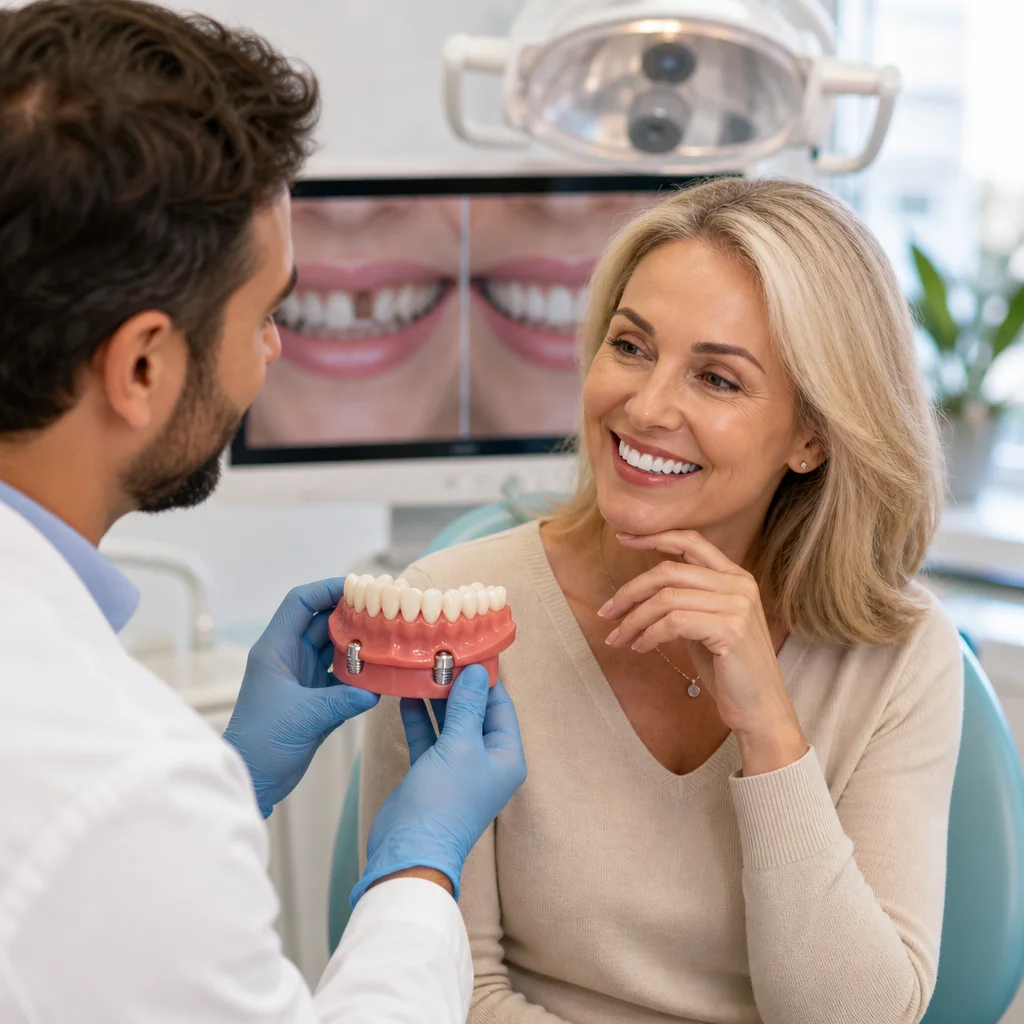
With removable implant overdentures, you simply take them out each evening, brush and floss them like you would natural teeth, and place them back in the morning. This straightforward routine means you’re far less likely to skip cleaning steps, and you can inspect your implants and gums daily for any signs of concern.
If your overdenture is fixed permanently, we design it so that you can still clean around it thoroughly with interdental brushes or water irrigation. Either way, maintaining implant overdentures is simpler and more effective than managing the complex geometry of a bridge.
Your takeaway: If daily maintenance ease is important to you, removable implant overdentures eliminate the need for specialized cleaning tools.
6. Cost-Effectiveness Over Time
The initial cost of implant overdentures is higher than a fixed bridge. That’s transparent and important to acknowledge. However, when you factor in replacement costs, adjustments, and the likelihood of eventual bridge failure, the economics shift dramatically in implant overdentures’ favor.
Consider this scenario: a bridge costs $3,000-$5,000 initially. In 15 years, it fails and needs replacement, costing another $3,500-$5,500. Supporting teeth may have weakened or developed decay, requiring additional treatment. Over 30 years, you might invest $8,000-$12,000 or more in multiple bridges and related treatment.
Implant overdentures might require $12,000-$18,000 upfront, depending on bone grafting needs and the number of implants required. But that investment often lasts 20-30+ years with minimal major expenses beyond routine maintenance. The overdenture portion itself may eventually need adjustment or remake, typically costing far less than a full bridge replacement.
We offer flexible financing through CareCredit and Lending Club to make implant overdentures accessible without straining your budget. Many patients find that spreading payments over manageable monthly installments makes this superior option financially feasible.
Your takeaway: Request a detailed cost comparison that includes projected replacement costs for bridges over 30 years versus the total investment in implant overdentures.
7. Comfort and Lifestyle Flexibility
Fixed bridges are comfortable once you adapt to them, but they don’t adapt to you. Implant overdentures, especially removable versions, give you flexibility. You can remove them for special events if you prefer, for cleaning and maintenance, or when you want extra comfort during sleep or recovery periods.
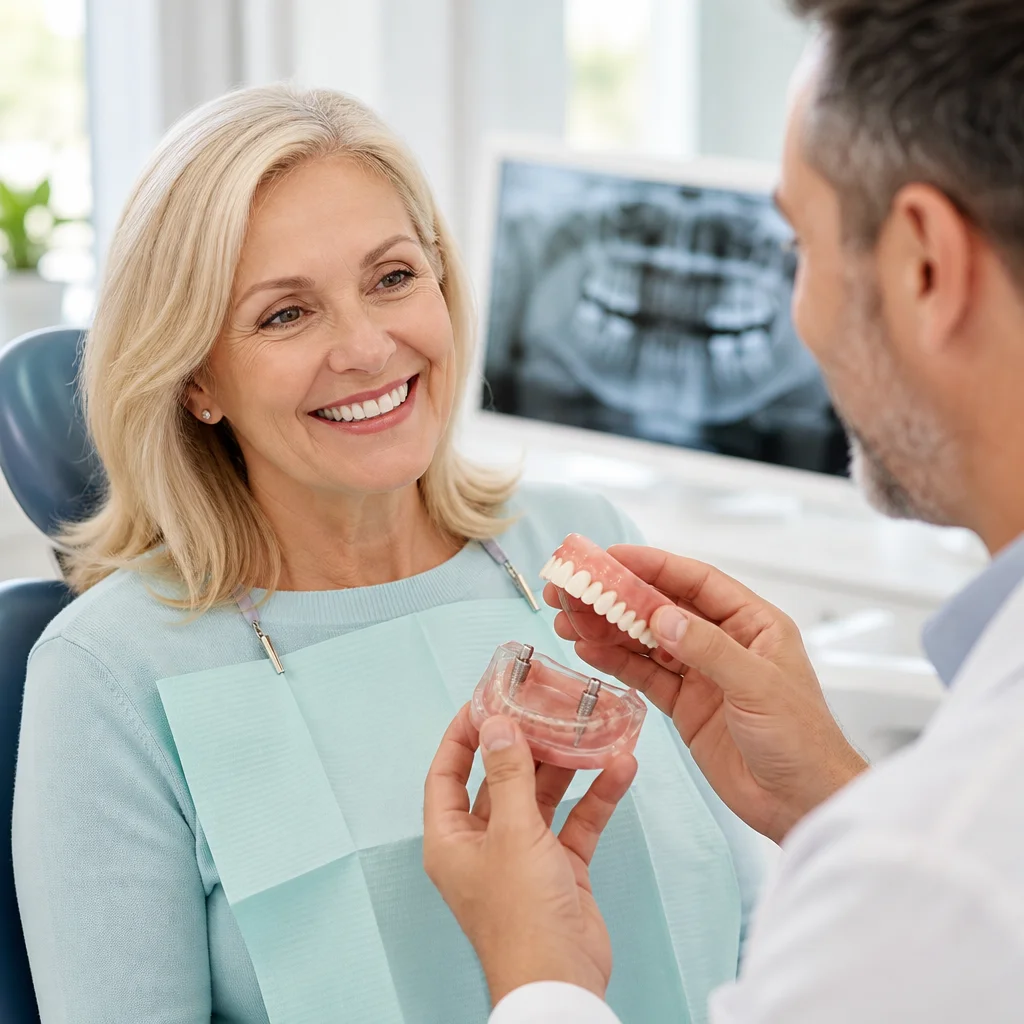
More significantly, implant overdentures restore your ability to eat confidently. Many patients who’ve worn traditional dentures for years are amazed at how much more securely they can bite down with implant support. Sticky foods, nuts, fresh vegetables, and crunchy textures become accessible again. This isn’t just about convenience; it’s about nutrition and enjoying meals without anxiety.
The psychological comfort matters too. You’re not dependent on keeping adjacent teeth healthy to maintain your restoration. You’re not worried about a bridge shifting or failing. You wake up knowing your implants are doing what they’re engineered to do: staying right where they belong.
At Smile Expert Design Center, we’ve helped families across North Miami Beach, Miami, and Miami Beach reclaim their smiles through implant overdentures. Dr. Jean-Jacques Edderai specializes in advanced cosmetic smile design and restorative treatments that deliver results exceeding what traditional bridges can offer.
We understand that choosing a tooth replacement solution is deeply personal. That’s why we provide comprehensive consultations where we evaluate your unique anatomy, discuss your lifestyle preferences, and show you realistic outcomes before you commit to treatment. Our 24/7 availability means you’ll have access to care whenever you need it, and our state-of-the-art technology including SOPROLIFE decay detection and X-MIND PRIME 3D imaging ensures every decision is based on precise clinical data.
Your takeaway: Try to imagine your daily life one year from now with implant overdentures versus a fixed bridge. Which scenario feels more aligned with how you want to live?
Implant overdentures beat fixed bridges for longevity, bone health, aesthetics, simplicity, long-term value, and genuine comfort. If you’re ready to explore how this superior restoration can transform your smile and your confidence, contact us today to schedule your consultation. Your dramatically improved smile is waiting.
For further reading: What are dental implants?.
Frequently Asked Questions (FAQ)
What makes implant overdentures a better choice than fixed bridges for most patients?
We’ve found that implant overdentures offer superior bone preservation because they stimulate the jawbone naturally, whereas fixed bridges can lead to bone loss over time. Our patients also appreciate the removability factor, which makes daily cleaning much simpler and helps maintain better long-term oral health. Plus, implant overdentures typically last 15-20 years or longer with proper care, significantly outlasting traditional fixed bridges.
How do implant overdentures affect my ability to eat and speak normally?
We design implant overdentures to be remarkably stable and secure, so most patients experience minimal adjustment periods before eating and speaking feel completely natural. Unlike some removable options, our implant-supported dentures don’t slip or click during conversation or meals, giving you the confidence to enjoy your favorite foods without restriction. Within a few weeks, most patients report they’ve adapted fully and forget they’re wearing a prosthetic.
What’s the actual cost difference between implant overdentures and fixed bridges over 10 years?
While implant overdentures require a higher upfront investment, we see that patients save considerably over time since they avoid the frequent adjustments and replacements that fixed bridges demand. Fixed bridges typically need replacement every 7-10 years, whereas our implant overdentures maintain their integrity much longer with routine care. We offer flexible financing through CareCredit and Lending Club to help make implant overdentures accessible right from your first appointment.