

Table of Contents
- Why Gum Health Matters During Clear Aligner Treatment
- Common Gum Concerns Our Patients Experience with Aligners
- How Our Advanced Technology Monitors Your Gum Health
- The SOPROLIFE Advantage: Real-Time Decay and Gum Detection
- Our 24/7 Monitoring Protocol for Aligner Patients
- Signs Your Gums Need Attention During Treatment
- Professional Care Between Aligner Check-Ins
- The Role of Digital Imaging in Tracking Gum Changes
- Preventive Habits to Protect Your Gums with Clear Aligners
- What Success Looks Like: Healthy Gums and Straighter Teeth
- Schedule Your Comprehensive Gum and Alignment Assessment Today
- Frequently Asked Questions (FAQ)
Why Gum Health Matters During Clear Aligner Treatment
When you start clear aligner therapy, your focus naturally lands on straighter teeth. That’s the visible goal, and it’s exciting. What we’ve learned over years of guiding patients through alignment treatment is that gum health is equally critical to your overall success. Healthy gums aren’t just a cosmetic detail—they’re the foundation that keeps your newly aligned teeth stable and comfortable long-term. We want you to understand how to protect them and recognize what we’re monitoring throughout your treatment.
Moving teeth is a gradual process that puts pressure on your gum tissue, bone, and the periodontal structures supporting each tooth. When aligners apply gentle, consistent force, your gums respond by remodeling around the shifting tooth roots. That’s completely normal, but it also means your gums need extra attention and care during orthodontic therapy.
Gum inflammation during aligner treatment can accelerate bone loss, cause discomfort, or even compromise the final result you’ve worked toward. If gum disease develops unchecked during treatment, it can weaken the attachment that holds your tooth in place, potentially undoing months of progress. This is why we emphasize that clear aligner success means healthy gums and straighter teeth working together.
Our patients who maintain excellent oral hygiene and stay engaged with our gum monitoring protocols experience smoother treatment journeys and more stable, aesthetic results. We track your gum health from the very first scan so you can move forward confidently.
Common Gum Concerns Our Patients Experience with Aligners
Most patients notice mild gum sensitivity during the first weeks of clear aligner therapy. Your gums may feel tender, look slightly redder, or bleed a touch during brushing. These are signs your periodontal tissues are responding to the new pressure—not an alarm, but a signal to intensify your home care routine.
Some patients also report:
- Slight swelling or puffiness along the gumline where aligners contact tissue
- Increased bleeding when flossing, especially around teeth being moved
- Dry gums if aligners trap moisture or interrupt saliva flow
- Localized discomfort in specific areas where tooth movement is most active
None of these issues are permanent if caught early. What matters is recognizing them quickly and adjusting your approach. We regularly ask about gum comfort during check-ins because early intervention prevents minor concerns from becoming complications that slow your treatment timeline.
How Our Advanced Technology Monitors Your Gum Health
We don’t rely on guesswork or assumptions about what’s happening below the surface. Our diagnostic tools give us a precise picture of your gum and bone health at every stage of treatment.
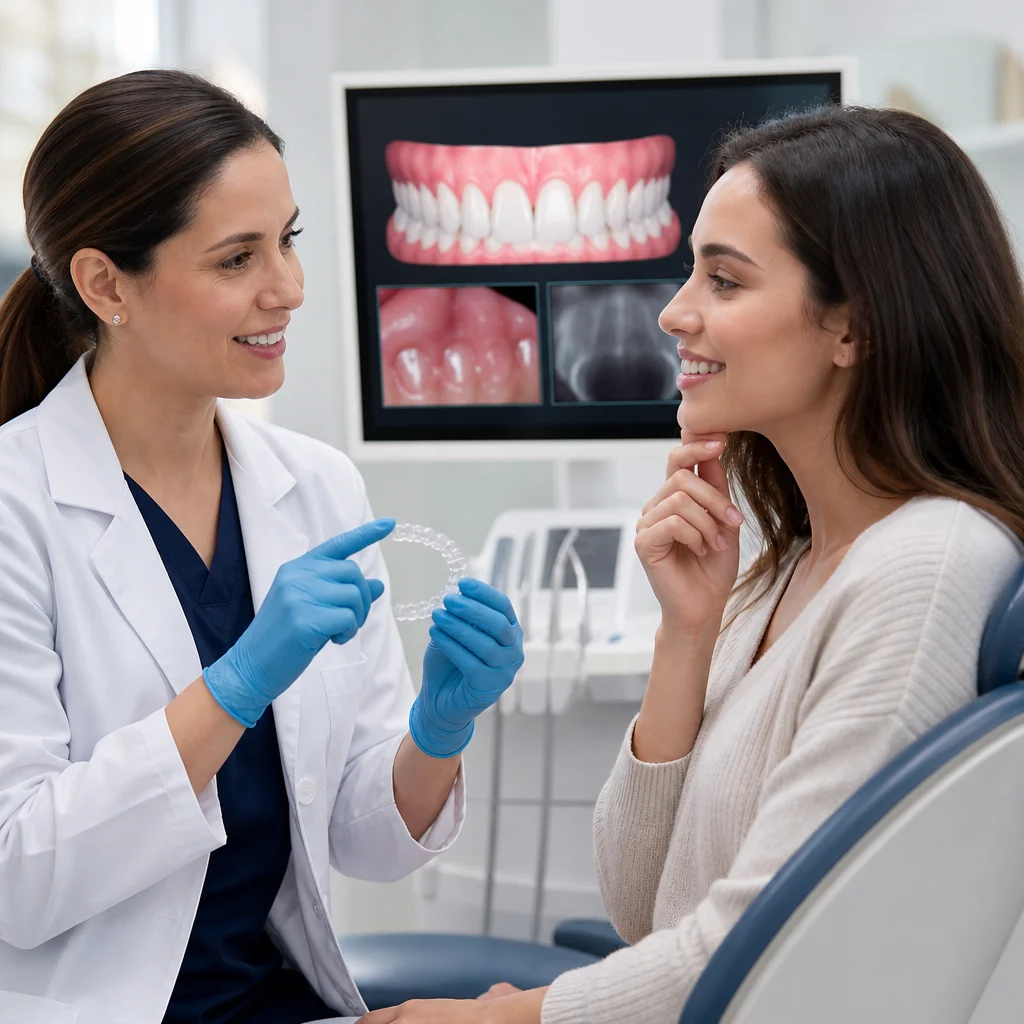
When you begin clear aligners with us, we capture baseline images and measurements that establish your individual gum architecture. Then, throughout your treatment, we use the same technology to track millimeter-level changes in gum thickness, bone density, and periodontal attachment. This data-driven approach means we catch subtle changes before you feel a problem, and we can adjust your treatment plan if needed.
Our 3D digital imaging technology reveals exactly how your gum contour is changing as teeth move. We’re not just looking at visible redness; we’re measuring the structural integrity of the tissues anchoring your teeth.
The SOPROLIFE Advantage: Real-Time Decay and Gum Detection
Our SOPROLIFE system is one of the most advanced tools we use for monitoring patients in clear aligner therapy. Unlike traditional visual exams that might miss early warning signs, SOPROLIFE uses real-time fluorescence imaging to detect demineralization and gum inflammation before they become visible to the naked eye.
When you visit for an aligner check-in, SOPROLIFE scans your tooth surfaces and gumline to identify areas of inflammation or hidden decay. Patients often don’t realize that aligners can trap food debris and bacteria more easily than traditional braces, creating pockets where decay starts silently. SOPROLIFE catches these areas during their earliest, most reversible stage.
For gum monitoring specifically, SOPROLIFE shows us inflammation signatures along the gumline and between teeth where aligners make flossing trickier. We can then recommend targeted hygiene adjustments or professional treatment before inflammation deepens. This proactive approach means fewer surprise problems and a smoother aligner journey.
Our 24/7 Monitoring Protocol for Aligner Patients
Because we offer 24/7 emergency dental services, you’re never left wondering whether a sudden gum issue needs urgent care or can wait for your next scheduled visit. If you notice unusual swelling, persistent bleeding, or sharp gum pain during your treatment, we’re available to assess the situation immediately.
Our aligner patients also benefit from our structured check-in protocol. We schedule you for brief progress appointments every 4-6 weeks (depending on your treatment plan) rather than waiting months between visits. These frequent touchpoints let us monitor gum health continuously and catch any deviation from your baseline measurements.
Between appointments, we encourage you to photograph your gums at home using consistent lighting and angle. These images help you notice gradual changes early. If you spot something concerning, send it to us, and we can often advise you immediately or schedule an urgent assessment.
Signs Your Gums Need Attention During Treatment
Your gums communicate with you if you listen closely. Knowing what’s normal versus concerning helps you take action faster.
Red flags that warrant a call or urgent visit include:
- Persistent bleeding or oozing from the gumline, even with gentle brushing
- Swelling that doesn’t improve after 2-3 days of excellent home care
- Pus, abscess, or painful pockets that feel tender to pressure
- Recession (gums pulling away from teeth), which becomes visible as tooth surface exposure
- Bad breath or foul taste that doesn’t clear after rinsing, suggesting bacterial overgrowth
Mild redness or tenderness during the first week of new aligners is expected and usually resolves within days. But if gum changes persist beyond a week or worsen, we need to evaluate them. Catching gum disease in its early stages is dramatically easier to manage than treating advanced periodontitis, and it protects your overall treatment timeline.
Professional Care Between Aligner Check-Ins
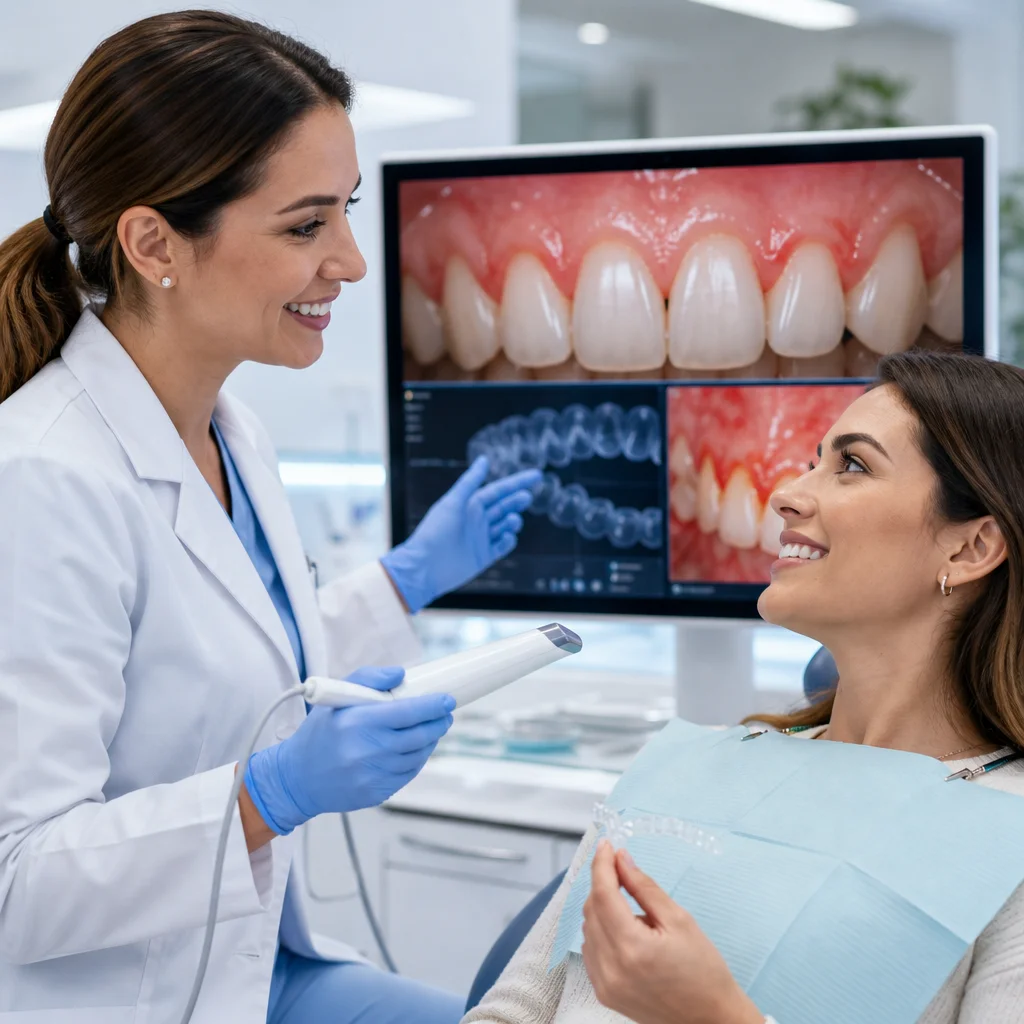
Your home routine is foundational, but professional cleanings during aligner therapy serve a specific purpose. Standard cleanings every 6 months aren’t enough for most aligner patients. We typically recommend professional cleanings every 3-4 months during active treatment to remove tartar and biofilm that accumulate in areas aligners make harder to reach.
Our hygienists use specialized techniques to clean around aligner attachment points (if your treatment includes them) and along the gumline with precision that home care alone can’t achieve. We also apply therapeutic rinses or targeted treatments if early inflammation appears.
Some patients benefit from periodontal laser therapy during treatment, which reduces bacterial load and inflammation without invasive procedures. This supportive care keeps your gums in optimal condition while your teeth move, ensuring alignment success isn’t compromised by periodontal decline.
The Role of Digital Imaging in Tracking Gum Changes
Our X-MIND PRIME 3D digital imaging system captures volumetric data about your entire jaw, including bone density, gum contour, and tooth position. This technology is transformative for aligner patients because it shows us not just where teeth are moving, but how bone and gum tissue are responding to that movement.
Every 8-12 weeks, we take updated 3D scans to compare against your baseline. These images reveal bone height changes, gum thickness variation, and any areas of concern that need intervention. The precision of this data allows us to make real-time adjustments to your aligner sequence if we notice gum tissue stress in a particular region.
Patients often feel reassured seeing these images because the data confirms that things are progressing as planned, or it alerts us early if something needs adjustment. Transparency through imaging builds confidence in your treatment.
Preventive Habits to Protect Your Gums with Clear Aligners
The habits you build during aligner treatment often become lifelong practices, which is wonderful for your long-term oral health. Here’s what we recommend:
Remove aligners before eating or drinking anything except water. Food particles trapped under aligners create perfect conditions for bacterial growth. Rinse your mouth or brush before reinserting aligners to minimize this risk.
Floss twice daily, ideally using a water flosser or traditional floss to reach areas between teeth and under the gumline. Many patients find water flossers easier to use with aligners and equally effective at removing debris.
Brush gently for two minutes, morning and night, using a soft-bristled toothbrush and fluoride toothpaste. Pay extra attention to the gumline, where aligners exert pressure.
Clean your aligners daily with cool water and an aligner cleaning solution. Bacteria accumulate on aligners, and worn aligners trap debris more easily than clean ones.

Avoid sugary snacks and acidic beverages between meals. Your saliva can’t neutralize acid effectively if aligners constantly cover your teeth, so minimize dietary stress on gums and enamel.
What Success Looks Like: Healthy Gums and Straighter Teeth
Treatment success isn’t just a beautiful digital image showing your new smile; it’s a transformation that includes vibrant, healthy gums and teeth that are stable, functional, and aligned. When you complete your aligner therapy with us, your gums should be as healthy (or healthier) than when you started.
We measure success through clinical metrics: gum color, probing depth, bleeding scores, and bone stability. We also measure it through how you feel: comfortable chewing, no sensitivity or pain, and confidence in your smile that extends to how you take care of your teeth going forward.
Many patients tell us that the discipline required during aligner therapy improved their daily oral hygiene habits permanently. They’ve learned to notice their gum health, they understand why prevention matters, and they’ve experienced the dramatic improvement a healthy, aligned smile brings to their confidence and quality of life. That transformation is our goal for every patient.
Schedule Your Comprehensive Gum and Alignment Assessment Today
If you’re considering clear aligners or you’re already in treatment and want to ensure your gums are thriving, we’re here to provide expert guidance and advanced monitoring. Dr. Jean-Jacques Edderai and our entire team specialize in comprehensive smile design that prioritizes both aesthetics and the long-term health of your gums, teeth, and supporting structures.
Contact Smile Expert Design Center today to schedule your comprehensive gum and alignment assessment. We serve patients throughout North Miami Beach, Miami, and Miami Beach with flexible financing options through CareCredit and Lending Club, making advanced dental care accessible. Whether you’re at the start of your alignment journey or maintaining results, we’ll monitor your gum health with the precision and care your new smile deserves.
Frequently Asked Questions (FAQ)
How do we monitor gum health during your clear aligner treatment?
We use our advanced SOPROLIFE technology to detect any gum concerns in real-time, allowing us to catch potential issues before they become problems. Our 24/7 monitoring protocol includes regular digital imaging with our X-MIND PRIME 3D system, which tracks subtle gum changes throughout your treatment. Between your check-ins with us, we provide clear guidance on protective habits and are always available if you notice any concerning symptoms.
What should I do if my gums feel irritated while wearing aligners?
First, we recommend removing your aligners and rinsing your gums gently with warm water, then examining the aligner for any sharp edges that might be causing irritation. Please contact us right away so we can assess the situation and adjust your aligners if needed, and we’re available 24/7 for any urgent concerns. In most cases, mild irritation responds quickly to proper aligner hygiene and our professional guidance.
Why is gum health just as important as tooth alignment during clear aligner therapy?
We believe achieving a beautiful smile means nothing if your gums aren’t healthy, since gum disease can undermine the results of your orthodontic treatment and cause long-term damage. Our comprehensive approach ensures we’re tracking both your teeth alignment and gum health simultaneously, so you end up with a genuinely healthy smile. We’ve found that patients who maintain excellent gum health during treatment experience faster results and better long-term stability.