

Table of Contents
- Why Root Canals Sometimes Lead to Implants
- Understanding When an Implant Becomes Necessary
- The Timeline: Root Canal to Implant Placement
- Our Advanced Diagnostic Approach at Smile Expert Design Center
- One-Visit CEREC Crowns for Complete Restoration
- Healing and Integration: What to Expect
- Long-Term Success and Maintenance Strategies
- Financing Your Implant Restoration
- Patient Comfort Throughout the Process
- Your Next Step Toward Lasting Results
- Frequently Asked Questions (FAQ)
Why Root Canals Sometimes Lead to Implants
A root canal saves a tooth by removing infected or damaged tissue from inside the tooth and sealing it to prevent further decay. Most of the time, this treatment works beautifully and your tooth continues serving you for many years. However, not every root canal outcome is the same. Sometimes the treated tooth develops complications down the road: a crown fractures, the seal weakens over time, or a new infection develops in an area we cannot easily access again.
When a tooth has already undergone root canal therapy and problems persist, extraction often becomes the most practical option. Rather than attempting repeated treatments on an already compromised tooth, we recommend moving forward with implant restoration. This approach actually gives you a better long-term solution. A dental implant mimics your natural tooth’s structure, including the root, and integrates directly with your jawbone, providing stability and function that no amount of re-treatment can replicate.
The shift from saving a tooth to replacing it represents progress in your dental health, not a setback. Modern implant technology makes this transition straightforward and highly successful.
Understanding When an Implant Becomes Necessary
Several clinical situations point toward implant placement as your best path forward after a root canal fails or complications arise:
Persistent pain or infection: If you experience ongoing discomfort despite root canal treatment, bacteria may have found a pathway we cannot eliminate through conventional retreatment.
Root fracture: A tooth that cracks vertically below the gum line cannot be restored; extraction and implant placement offer the only viable solution.
Failed crown or seal breakdown: When the restoration protecting your root canal tooth deteriorates, reinfection spreads quickly through the tooth structure.
Bone loss around the tooth: Chronic infection can damage the bone supporting your tooth, making extraction necessary to prevent spreading and preserve neighboring teeth.
Your preference for a permanent solution: Some patients simply prefer the certainty and longevity of an implant over the uncertainty of a re-treated tooth.
We evaluate each situation individually because your tooth, your bone structure, and your health history are uniquely yours. This is where precise diagnosis becomes essential.
The Timeline: Root Canal to Implant Placement
The journey from a problematic root canal to a fully restored implant typically spans several months, though the exact timing depends on your healing capacity and bone quality.
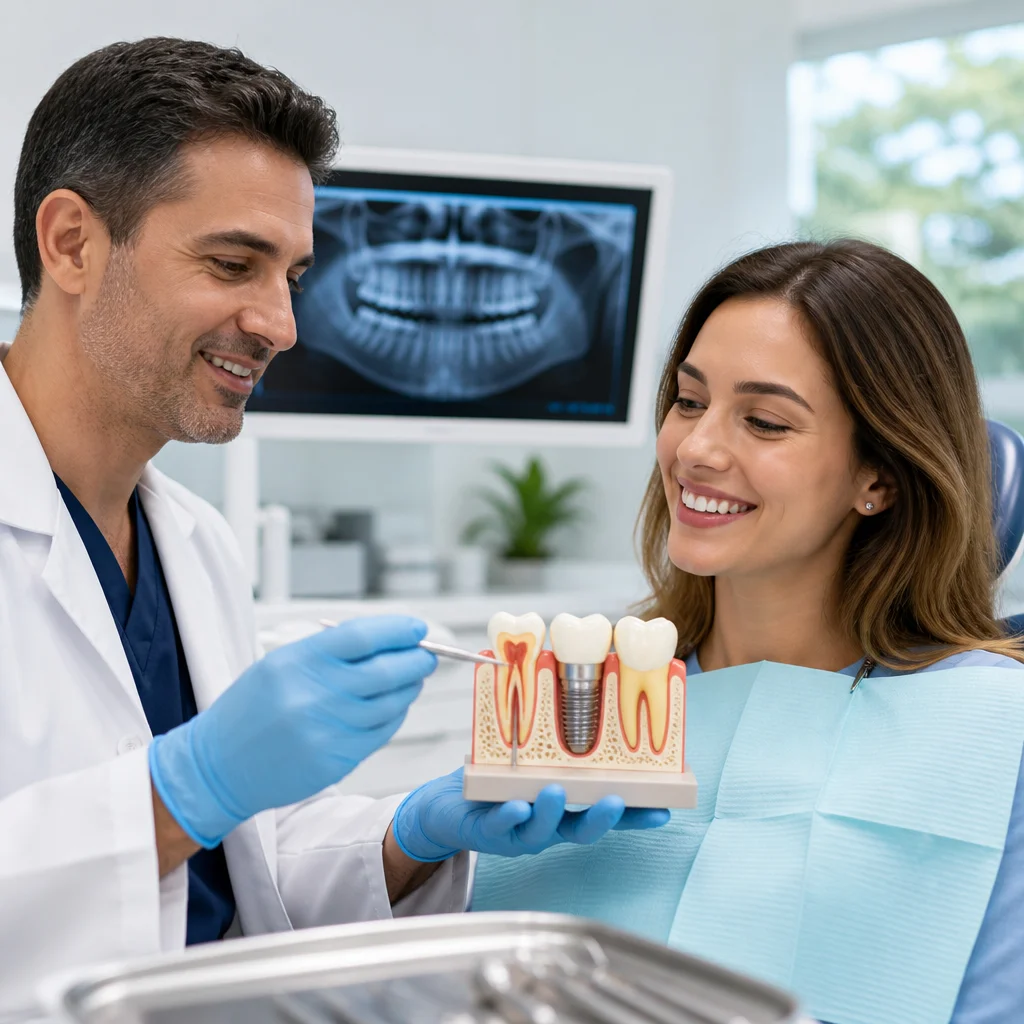
Weeks 1-2: Extraction and initial healing: Once we extract the tooth, the first two weeks focus on stabilizing the extraction site. You’ll follow post-extraction care instructions carefully to support proper healing and minimize discomfort.
Weeks 3-12: Bone remodeling: Your body begins filling the gap left by the tooth. During this phase, the bone gradually remodels and strengthens. If bone density is insufficient for implant placement, we may recommend bone grafting to build a stronger foundation.
Month 3-4: Implant placement: When bone density reaches optimal levels, we place the implant into the jawbone. This serves as your new tooth root and requires time for osseointegration, the biological process where bone fuses around the implant.
Months 4-6: Osseointegration period: The implant integrates with your bone during this critical healing window. We’ll monitor your progress with follow-up visits and imaging.
Month 6+: Crown placement: Once integration is complete, we attach a permanent crown or restoration to the implant. If you’re looking for speed without compromising quality, our one-visit CEREC crowns technology allows us to design and place your restoration in a single appointment.
Your specific timeline may vary based on how quickly your body heals and the complexity of your case.
Our Advanced Diagnostic Approach at Smile Expert Design Center
Before recommending implant placement, we conduct a comprehensive evaluation using cutting-edge diagnostic technology that leaves nothing to chance. This thorough approach ensures we design a treatment plan tailored specifically to you.
We begin with our X-MIND PRIME 3D digital imaging system, which captures precise three-dimensional images of your jawbone, tooth roots, nerves, and sinuses. This level of detail allows us to identify exactly where implant placement will succeed and where we need to exercise caution. We can visualize bone density, height, and width instantly.
Beyond imaging, we use SOPROLIFE decay detection technology to ensure no residual infection remains in the extraction socket or surrounding teeth. This advanced visualization catches problems invisible to the naked eye, confirming that we’re building your restoration on a genuinely healthy foundation.
We also assess your overall health, medications, and bone quality during a thorough consultation. Patients with excellent bone density heal faster and enjoy more predictable outcomes. If your bone needs strengthening, we discuss grafting options upfront so there are no surprises.
One-Visit CEREC Crowns for Complete Restoration
After your implant has fully integrated with your bone, the final step is placing your permanent crown. This is where modern technology transforms your experience. Rather than waiting weeks for a lab to fabricate your crown, we design and mill it right here in our office using CEREC technology.
Our CEREC system uses digital impressions and CAD/CAM milling to create a precisely fitting porcelain crown in under an hour. You walk in, we prepare and scan your implant, design your crown on screen to match your natural smile, and place the finished restoration before you leave. No temporary crowns, no multiple appointments, no waiting.
The crown material is tooth-colored porcelain that blends seamlessly with your surrounding teeth. We shade-match it carefully so your implant restoration becomes indistinguishable from your natural teeth. Your new smile will be dramatically improved, both in function and appearance.
Healing and Integration: What to Expect
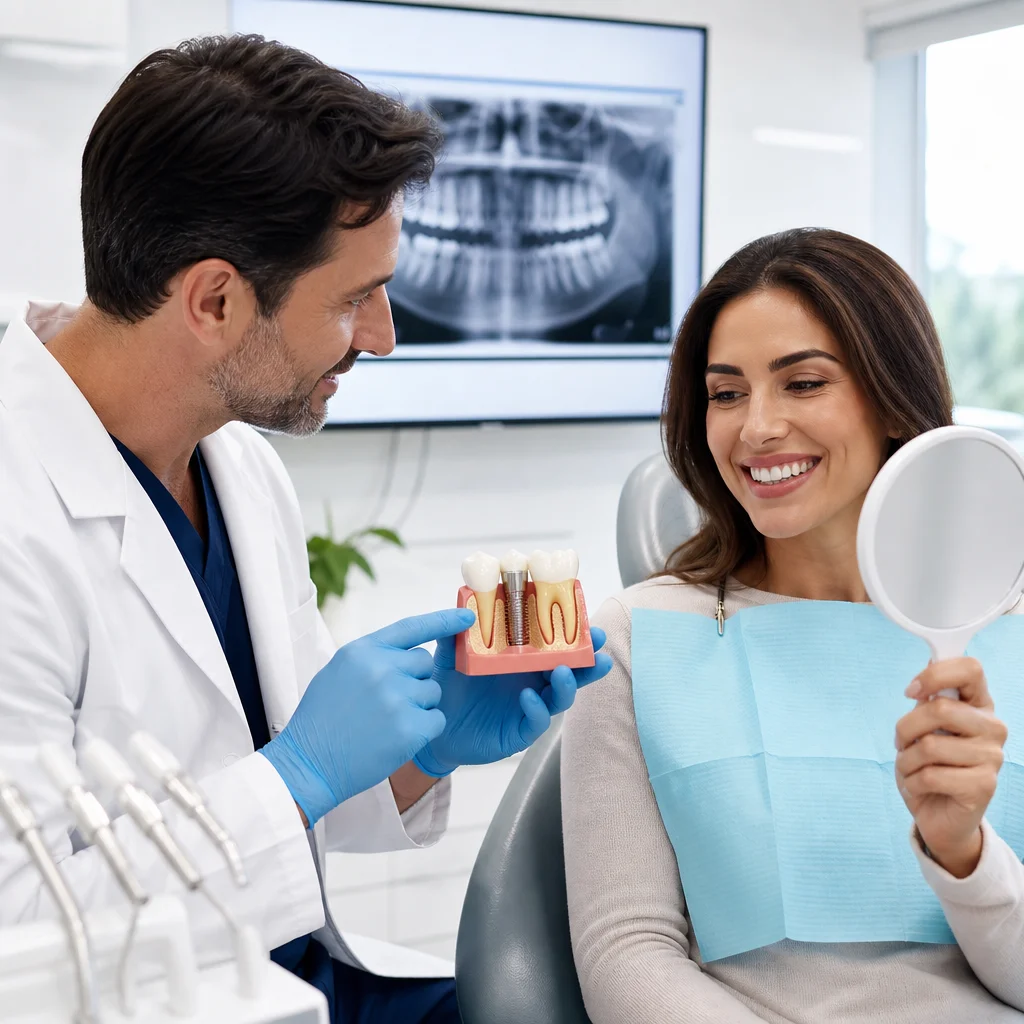
The period after implant placement requires patience and careful attention to post-operative instructions. During the first week, you’ll experience some swelling and mild discomfort, which we manage with prescribed pain medication and ice therapy. Most patients return to light activities within 3-5 days.
Avoid chewing on the implant side for the first few months while osseointegration occurs. Eating soft foods, staying hydrated, and maintaining gentle oral hygiene around the implant site all support healing. We provide detailed aftercare instructions and remain available if you have concerns.
At scheduled follow-up appointments, we verify that your implant is integrating properly using imaging and clinical assessment. You won’t feel the integration happening, but our diagnostics confirm progress. By month 4-6, most patients are ready for crown placement.
Some patients experience minor tingling or sensitivity around the implant site as nerves adjust to the restored tooth. This typically resolves within weeks. We monitor your comfort continuously and adjust your care plan if needed.
Long-Term Success and Maintenance Strategies
A dental implant with proper care lasts 25+ years, often for a lifetime. The key to longevity lies in consistent maintenance and professional support from our team.
Your daily routine: Brush twice daily, floss around the implant crown just as you would a natural tooth, and use an antimicrobial mouthwash if recommended. Implants don’t develop cavities, but the tissues around them can become inflamed if plaque builds up.
Professional cleanings: Visit us every 6 months for professional cleaning and implant health assessment. We use specialized instruments that won’t damage your implant while removing stubborn buildup.
Avoid damaging habits: Don’t chew on ice, hard candy, or pen caps. Don’t use your implant crown as a tool. Wear a night guard if you grind your teeth, as grinding can stress the implant-crown connection.
Watch for warning signs: Contact us immediately if you notice looseness, unusual pain, swelling around the implant, or problems with your bite. Early intervention prevents complications.
Maintain overall health: Conditions like diabetes and smoking impair bone healing and implant success. Controlling systemic health factors supports your implant’s longevity.
Financing Your Implant Restoration
We understand that implant treatment represents a significant investment in your oral health. That’s why we offer multiple financing options to make treatment accessible.
CareCredit allows you to spread implant and restoration costs across manageable monthly payments with promotional financing periods available to qualified patients. Lending Club provides personal loans that many patients use to consolidate dental treatment costs.
Our team works with your insurance company to maximize any benefits you may have toward implant treatment. We can also discuss payment plans that break your treatment into phases, allowing you to manage costs over time.
Schedule a consultation to discuss pricing and financing. We’re committed to finding a solution that works for your budget without compromising quality.
Patient Comfort Throughout the Process
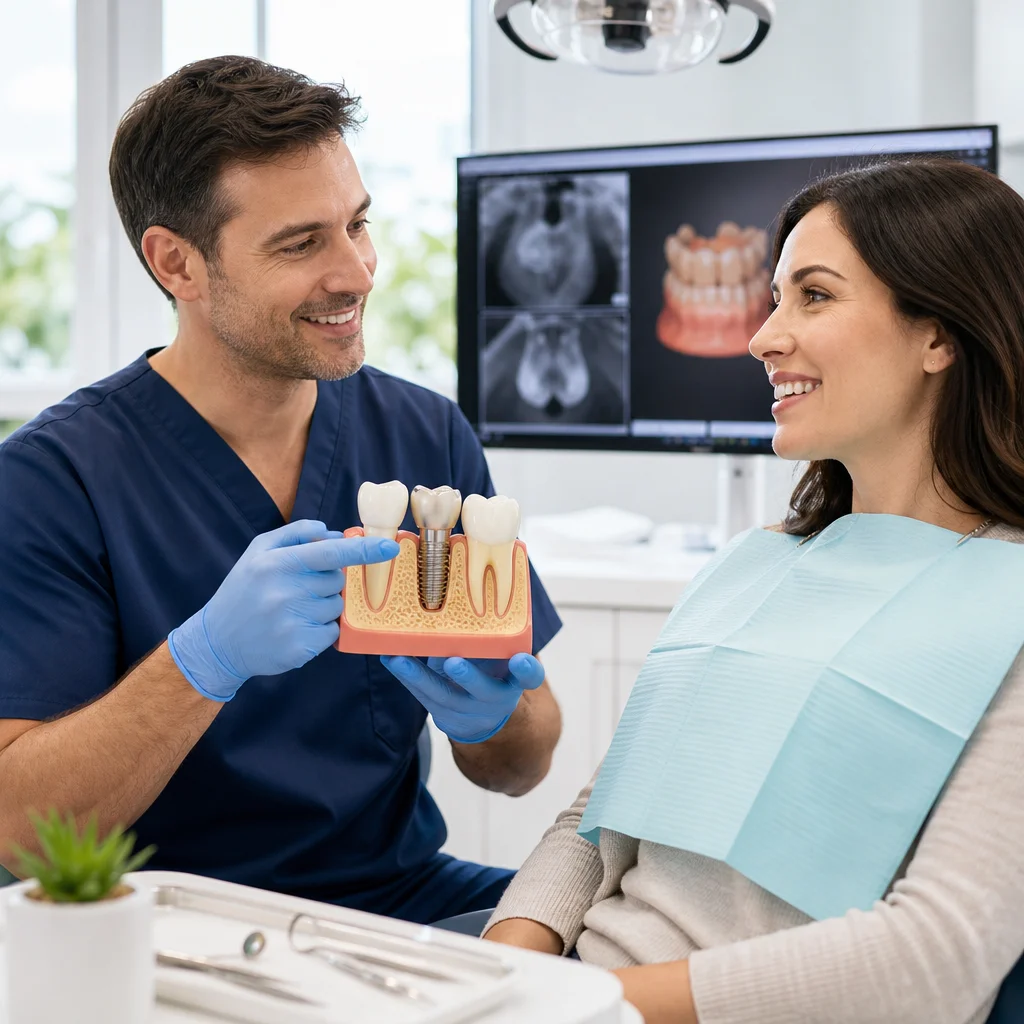
Anxiety about dental procedures is common and completely understandable. We prioritize your comfort at every stage, starting with local anesthesia that numbs the surgical area completely. You’ll feel pressure and vibration during implant placement, but no pain.
For patients who experience significant anxiety, we offer sedation options that help you relax while we work. Nitrous oxide (laughing gas) provides light relaxation, while deeper sedation is available if you prefer.
Our team moves at your pace. We explain each step before we begin it, answer your questions thoroughly, and take breaks if you need them. Your confidence and comfort matter to us because they directly affect your willingness to pursue dental care and your satisfaction with results.
Many patients find that after their first appointment, they realize their fears were unfounded. The actual experience of modern implant treatment is far gentler than the anxiety beforehand.
Your Next Step Toward Lasting Results
If you’re dealing with a failing root canal tooth or wondering whether implant restoration is right for you, a detailed consultation is the first step. We’ll examine your tooth, review your imaging, discuss your goals, and explain exactly what treatment looks like for your situation.
Contact Smile Expert Design Center today to schedule your implant evaluation. Dr. Jean-Jacques Edderai and our team are here to guide you toward a restored smile that lasts. We serve patients throughout North Miami Beach, Miami, and Miami Beach with flexible scheduling, including 24/7 emergency dental care if you need urgent attention.
Your smile is worth investing in. Let’s restore it together.
Frequently Asked Questions (FAQ)
What’s the typical timeline from a root canal to getting a dental implant?
We generally recommend waiting three to six months after your root canal before proceeding with implant placement. This allows the bone and soft tissues to heal properly and ensures we have a stable foundation for your implant. During this healing period, we’ll monitor your progress with our advanced X-MIND PRIME 3D imaging to confirm you’re ready for the next phase of your restoration.
How do we know if an implant is the right choice after my root canal treatment?
We use our SOPROLIFE decay detection technology and comprehensive digital imaging to assess whether your tooth can be successfully restored or if an implant offers better long-term outcomes. If the root canal tooth has recurring issues, extensive damage, or structural compromise, we’ll discuss implant placement as a more durable solution that can last a lifetime with proper care.
Can we complete the entire restoration in one visit after my implant integrates?
Once your implant has fully integrated into the bone, we can often use our CEREC technology to design and place a custom porcelain crown in a single appointment. This means you walk out with a complete, natural-looking restoration without waiting for a lab to fabricate your crown, getting you back to full function and confidence quickly.